Get Full Government Meeting Transcripts, Videos, & Alerts Forever!
Get email alerts on the Agriculture Hay topic
No spam. Unsubscribe anytime.
Commission seeks UNH assessment of county hay fields after low sales, milkweed concerns
Summary
Commissioners directed staff to contact the UNH Cooperative Extension for an evaluation and plan for county hay fields amid lower recent revenue, milkweed infestation and debate over round vs. square bales.
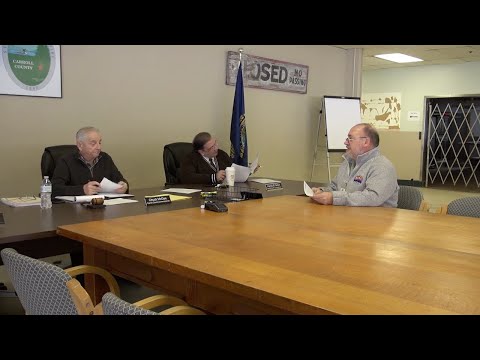
Carroll County commissioners on Feb. 10 directed county staff to contact the University of New Hampshire Cooperative Extension for an evaluation of county hay fields and recommendations to address quality problems and future management.
County staff described roughly 70 acres of county property currently used for hay and said recent sales have fallen. “We asked the budget was $30,000 in revenue last year. I think we did $18,000,” a county staff member said, noting the county produced a large volume of hay but struggled to sell inventory after operational changes. Commissioners and members of the public pointed to several causes, including an increase in milkweed infestations, a shift from square to round bales, loss of delivery and storage services, and labor limits.
Will (county staff member), who manages the hay operation, recommended reaching out to UNH Extension’s forage specialists to assess fields, recommend remediation (including targeted spraying or field renovation) and develop a multi-year plan. “I'll get a hold of…our representative of Carroll County to hook us up with the gentleman's name that specializes in forages and haylands and see if we can…come back with a plan,” Will said. Commissioners approved the direction to pursue an Extension assessment.
The discussion covered operational tradeoffs. Staff explained the county switched to round bales beginning in 2020 because round baling requires less labor and can be handled by two people, while square bales (which historically sold quickly) require more labor and inmate or seasonal help. Several public commenters said the county’s decision to stop offering delivery and on-site storage had discouraged longstanding customers.
Staff emphasized that remediation will take time; options discussed included selective spraying for heavy milkweed pockets, reseeding priority fields over multiple seasons, and reintroducing some square-bale production if labor and storage capacity return. Commissioners asked staff to return with UNH’s findings and a plan that includes cost and timeline estimates.
Next steps: Staff to contact University of New Hampshire Cooperative Extension forage specialists, obtain field evaluations and present recommendations and cost estimates to the commission.