Get Full Government Meeting Transcripts, Videos, & Alerts Forever!
Get email alerts on the Short Term Rentals topic
No spam. Unsubscribe anytime.
Goshen board holds extended public hearing on draft short‑term rental law after wide public comment
Summary
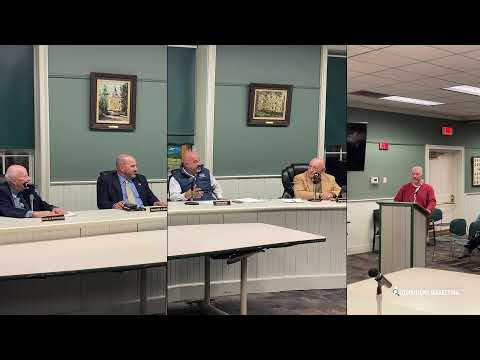
The Town of Goshen Town Board kept the public hearing open on Dec. 12 on Introductory Law 13, a proposed local law to regulate short‑term rentals, after more than an hour of public comment pressing for stricter limits and clearer enforcement.
The Town of Goshen Town Board kept the public hearing open on Dec. 12 on Introductory Law 13, a proposed local law to regulate short‑term rentals, after more than an hour of public comment pressing for stricter limits and clearer enforcement.
The hearing drew residents who described repeated quality‑of‑life impacts from rentals in residential neighborhoods and urged the board to consider either prohibiting short‑term rentals in residential districts or requiring owners to be on‑site while guests occupy a property.
Introductory Law 13 would add a new chapter to the town code imposing a permitting regime for short‑term rentals. Town staff said the board received a Section 239 referral from the county and is still awaiting planning‑board materials; the board classified the proposal as a Type I action and stated its intent to act as lead agency for environmental review.
Why it matters: residents said the draft leaves key enforcement and public‑safety questions open — including how occupancy will be determined and enforced, whether septic systems can handle high occupancies, who pays for inspections, and whether permit fees or bonds should cover enforcement costs.
Residents' concerns and recommendations
George Wright, a resident who said he lives next to an Airbnb, described recurring problems including garbage left outdoors, missing property he reported to police and difficulty getting a response from the host. “I love my house. I retired here for a reason, but not for to have an Airbnb — a business, not a residence,” Wright said. He suggested requiring the owner to be present when guests occupy the property so someone can respond and enforce rules.
Chris Healy, who identified himself as being from the Town of Goshen, urged the board to consider the broader community effects of reliable, enforceable rules and noted potential impacts on property values and municipal services. “Having dependable, rapid ambulance service is of utmost importance to everyone in our community,” Healy said while speaking later on ambulance issues; on rentals he urged strict limits and enforcement.
Tom Howard and other speakers pressed the board on enforceability, suggesting fines and compliance mechanisms are currently weak: Howard said fines may be difficult to collect and that revoking a permit may not remove occupants immediately. He proposed involving the police more directly in enforcement and increasing fines or requiring a bond for out‑of‑town owners.
Technical and code questions raised
Multiple speakers asked for clarity in the draft on definitions and implementation details: how “occupied by owner” is measured, whether floor plans must be professionally prepared, whether parking requirements rely on self‑certified plans, and whether septic sizing supports the proposed maximum occupancy (12 persons). One commenter recommended a maximum of six occupants rather than 12 and questioned 11 p.m. quiet hours as too late for residents who begin early commutes.
Board process and next steps
Town staff and board members said they will incorporate public comments into a revised draft. The board noted that the planning board has not yet submitted its review and that additional material was received recently; staff said they intend to circulate another draft before the next hearing date. The board moved to keep the public hearing open and set a continuance date; the board also took a motion to classify the proposal as a Type I action for environmental review.
The hearing remains open for additional written comments and for planning board feedback; staff said they will publish a revised draft before the next public hearing period.
Ending
The board did not adopt the law on Dec. 12. Instead, it kept the hearing open to gather more planning board analysis and public input and signaled staff will circulate an updated draft in advance of the next hearing.