Get Full Government Meeting Transcripts, Videos, & Alerts Forever!
Get email alerts on the Commerce topic
No spam. Unsubscribe anytime.
Commerce Committee opens session, outlines priorities on manufacturing, Transfer Act and brownfields
Summary
The state Commerce Committee opened with member introductions and a broadly bipartisan agenda that emphasized manufacturing support, a move away from the Transfer Actmodel, brownfield remediation funding, childcare as an economic driver and reuse of vacant retail space, committee leaders said.
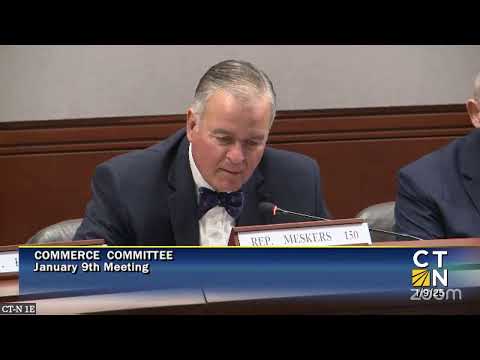
The Connecticut General Assembly's Commerce Committee convened for an organizational meeting in which members introduced themselves and laid out priorities for the legislative session, emphasizing manufacturing support, brownfield redevelopment and a planned change to the state's Transfer Act, committee leaders said.
The committee chairs and several members framed economic development as the panel's central goal. They highlighted the Office of the Chief Manufacturing Officer, instituted in recent years, as a key tool that helped Connecticut manufacturers respond during the COVID-19 pandemic and said the committee will continue to focus on workforce and supply-chain issues that affect employers and jobs.
The session also touched on a proposed shift in the Transfer Act's approach to contaminated properties. Members described a move from the current "transfer" model toward a release-based approach already included in the governor's package and awaiting consideration in the Environment Committee. Committee members said the goal is to make remediation and redevelopment of shuttered or underused properties easier and thereby return sites to the tax rolls.
Members recalled reforms enacted last session'including regulatory changes to the Community Economic Development Fund and increased brownfield remediation funds'and said the committee will ask the Department of Economic and Community Development (DECD) for updates on how the additional money has been used to spur redevelopment.
Other priorities mentioned by members included treating child care as an economic driver, exploring creative reuse of vacant big-box stores and struggling malls, and further supporting small businesses. The panel's members also said they plan to organize a Manufacturing Caucus to facilitate subject-matter hearings and stakeholder input. The caucus will be open to all General Assembly members; committee staff said regular Commerce Committee days are typically Tuesdays and Thursdays at 11 a.m., and members noted a tentative caucus meeting on Tuesday the 14th.
Brie Wolf was introduced as the committee's new liaison from the Department of Economic and Community Development; members said she will be a primary DECD contact for committee work this session.
The meeting consisted primarily of opening remarks and committee orientation; no formal motions or votes were taken during the session. Committee leaders encouraged members and outside stakeholders to submit concepts and regulatory concerns so the panel can decide where to hold hearings and whether to pursue bill drafts.
The committee scheduled its next regular meeting and indicated additional, topic-focused hearings will follow as staff and members arrange agendas and gather agency briefings.