Get Full Government Meeting Transcripts, Videos, & Alerts Forever!
ND health officials outline plan, timeline to apply for federal Rural Health Transformation funding
Summary
North Dakota health officials told a legislative interim committee on Oct. 14 they will submit the state’s application for the federal Rural Health Transformation Program by Nov. 5, 2025, and urged lawmakers to identify policy and funding priorities — especially workforce, access and prevention — that could increase North Dakota’s share of competitive supplemental funding.
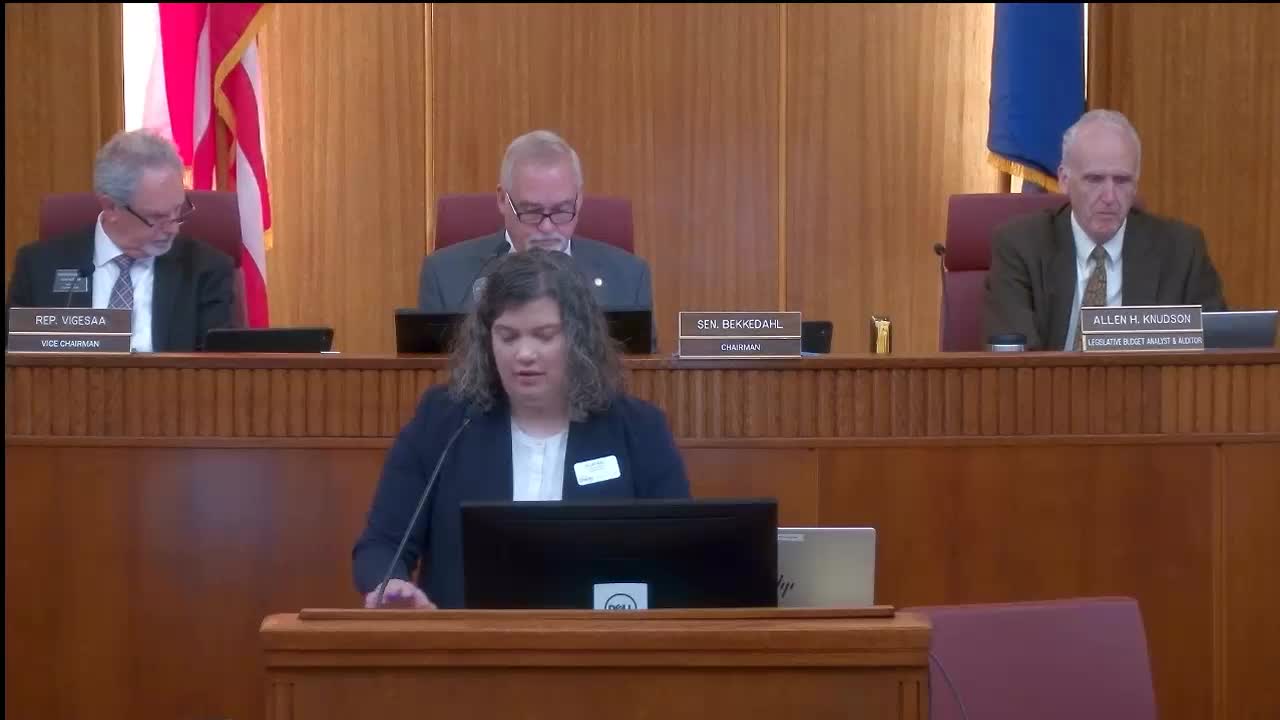
North Dakota Department of Health and Human Services officials told the Legislature’s Rural Health Transformation Interim Committee on Oct. 14 that the state will submit an application for the federal Rural Health Transformation Program by the Nov. 5, 2025 deadline and asked legislators to prioritize policy and budget decisions needed to maximize supplemental funding.
Sarah Aker, executive director of the Division of Medical Services at the North Dakota Department of Health and Human Services (DHHS), said the federal program was created by HR 1 and appropriates $50 billion nationwide over five years. "There’s a one-time application for all five years of the funding," Aker said, adding that the Centers for Medicare & Medicaid Services (CMS) must approve applications by Dec. 31, 2025.
Why it matters: half of the federal money is distributed equally to all states as baseline funding (guaranteeing each state at least about $100 million a year); the other half is competitive “workload” funding scored on demographic, facility and policy factors. Aker warned that North Dakota’s standing on the demographic/facility measures puts the state behind many others and that much of the supplemental money will be awarded based on a state’s technical and policy commitments.
DHHS outreach and priorities
Aker said DHHS gathered input through a statewide survey (more than 1,200 responses) and three virtual listening sessions (about 350 attendees). Workforce was the top priority identified in both formats, followed by right-sizing access to care and prevention/chronic-disease management. Common ideas cited by providers and community respondents included expanding rural rotations and residencies, mobile clinics, telehealth infrastructure, shared electronic health records and community health worker programs.
Aker described four broad buckets that will structure the state’s proposed uses: (1)…
Already have an account? Log in
Subscribe to keep reading
Unlock the rest of this article — and every article on Citizen Portal.
- Unlimited articles
- AI-powered breakdowns of topics, speakers, decisions, and budgets
- Instant alerts when your location has a new meeting
- Follow topics and more locations
- 1,000 AI Insights / month, plus AI Chat