Get Full Government Meeting Transcripts, Videos, & Alerts Forever!
Get email alerts on the Rural Health Transformation Grant topic
No spam. Unsubscribe anytime.
ND health officials outline plan, timeline to apply for federal Rural Health Transformation funding
Summary
North Dakota health officials told a legislative interim committee on Oct. 14 they will submit the state’s application for the federal Rural Health Transformation Program by Nov. 5, 2025, and urged lawmakers to identify policy and funding priorities — especially workforce, access and prevention — that could increase North Dakota’s share of competitive supplemental funding.
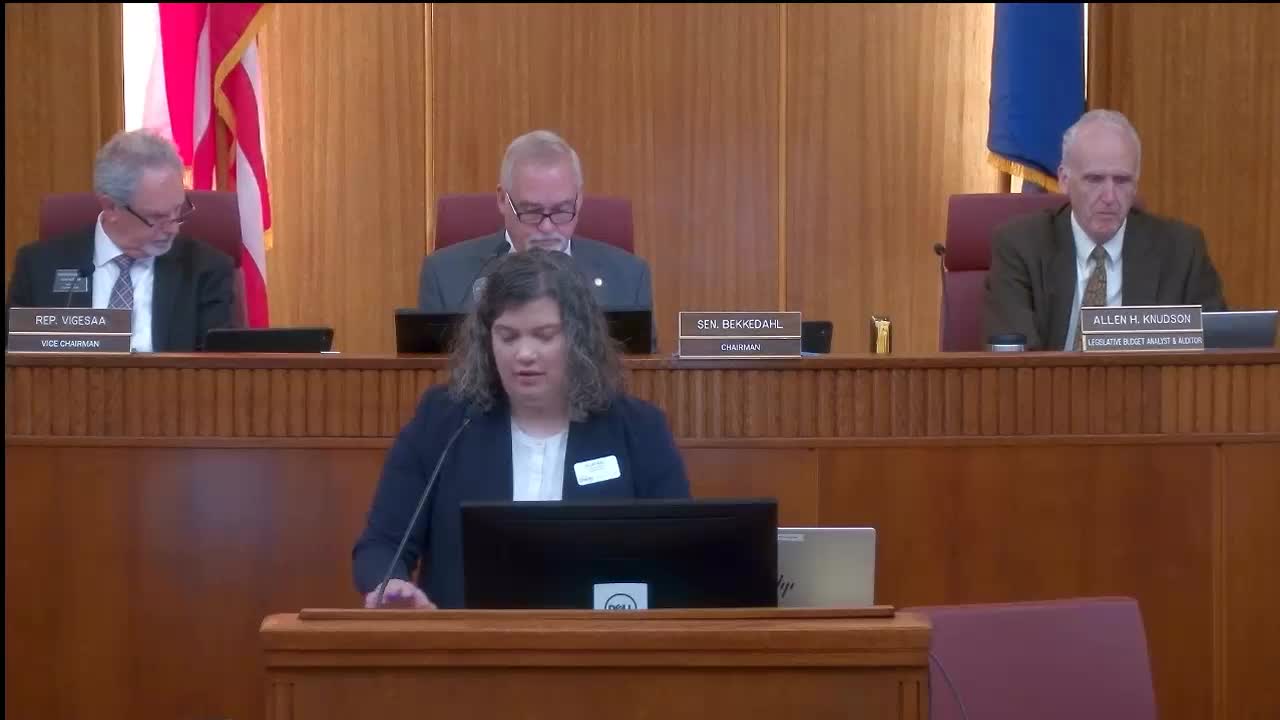
North Dakota Department of Health and Human Services officials told the Legislature’s Rural Health Transformation Interim Committee on Oct. 14 that the state will submit an application for the federal Rural Health Transformation Program by the Nov. 5, 2025 deadline and asked legislators to prioritize policy and budget decisions needed to maximize supplemental funding.
Sarah Aker, executive director of the Division of Medical Services at the North Dakota Department of Health and Human Services (DHHS), said the federal program was created by HR 1 and appropriates $50 billion nationwide over five years. "There’s a one-time application for all five years of the funding," Aker said, adding that the Centers for Medicare & Medicaid Services (CMS) must approve applications by Dec. 31, 2025.
Why it matters: half of the federal money is distributed equally to all states as baseline funding (guaranteeing each state at least about $100 million a year); the other half is competitive “workload” funding scored on demographic, facility and policy factors. Aker warned that North Dakota’s standing on the demographic/facility measures puts the state behind many others and that much of the supplemental money will be awarded based on a state’s technical and policy commitments.
DHHS outreach and priorities
Aker said DHHS gathered input through a statewide survey (more than 1,200 responses) and three virtual listening sessions (about 350 attendees). Workforce was the top priority identified in both formats, followed by right-sizing access to care and prevention/chronic-disease management. Common ideas cited by providers and community respondents included expanding rural rotations and residencies, mobile clinics, telehealth infrastructure, shared electronic health records and community health worker programs.
Aker described four broad buckets that will structure the state’s proposed uses: (1) strengthen and stabilize the rural health workforce, (2) bring high-quality care closer to home (including rightsizing and telehealth), (3) invest in prevention and chronic-disease management, and (4) connect technology and data across providers.
Allowable uses, limits and sustainability
Aker reviewed CMS’ allowable and unallowable uses. Key limits the state must follow include: provider payments capped at 15% of total grant funding, administrative and indirect costs capped at 10%, EMR/EHR replacement capped at 5% of a state’s budget, and facility renovations capped at 20% (new construction and expansion are unallowable). CMS will not allow spending to supplant existing federal, state, local or tribal obligations and is discouraging projects without a realistic sustainability plan.
Aker said sustainability is a major scoring element and that states receiving partial policy points may be required to return funds if promised policy changes are not completed. "If we say we were going to require North Dakota schools to adopt the presidential fitness test and then we don’t do it, we would owe back the proportion of the funding related to that policy initiative," she said.
Scoring risks and state standing
The NOFO (notice of funding opportunity) allocates half of supplemental scoring to static rural/facility factors (population size, facility counts, frontier population, uncompensated care and Medicaid disproportionate share hospitals) and half to technical/policy factors (program initiatives, data infrastructure, telehealth policy, workforce strategies, etc.). Aker said an independent UNC analysis places North Dakota well below many states on the static rural/facility factors (she cited a 40th-of-50 composite ranking), though North Dakota ranks highly in frontier population share (third). DHHS staff warned that the state should expect a comparatively modest share of workload funding unless its application earns strong technical/policy scores.
Policy items and state actions discussed
Aker and committee members discussed specific policy levers CMS is citing for extra points: a state SNAP food-restriction waiver, required nutrition continuing medical education, a presidential fitness policy for schools, expanding licensure compacts (physicians, PAs, nurses, EMS, psychology), scope-of-practice changes (pharmacists, dental hygienists) and telehealth licensing/registration options. DHHS said it plans to submit a SNAP waiver by Nov. 5 and that some other items (for example, the physician assistant compact) have pending or failed legislation at the Capitol — the PA compact bill (Senate Bill 2108) failed this session.
Data, telehealth and technical infrastructure
Aker said CMS places substantial weight on data interoperability, remote care and consumer-facing technology. DHHS expects to propose investments in community information exchanges, an all-payer claims approach, remote patient monitoring and cooperative purchasing for cybersecurity and EMR tools. The department told the committee it will likely hit the 5% cap for EMR replacement and the 20% cap for renovations in its draft budget.
Timeline, procurement and implementation concerns
DHHS staff emphasized tight federal timelines: the application is due Nov. 5, 2025; CMS must issue awards by Dec. 31, 2025; and awarded funds must be obligated and liquidated on CMS’ timetable. Committee members asked how subgrants will be paid. Donna Aukland, DHHS chief financial officer, said federal rules typically require state grant reimbursements rather than prepayments: "We can’t generally prepay somebody ahead of time. We have to reimburse based upon actual costs," she said. Committee members expressed concern that reimbursement-only payments and state procurement processes could slow the ability of small rural providers to stand up projects quickly.
Tribal consultation and targeted needs
Aker said DHHS held tribal consultation and met with Indian Health Service officials. Tribal leaders emphasized chronic disease, behavioral health, dental and maternal health gaps, workforce development, cultural competency and data capacity for tribal providers. DHHS said it will specifically invite tribes and urban Indian organizations to apply for subgrants.
Questions from legislators
Legislators pressed on whether policy commitments could be added later, how money would be prioritized between large regional centers and small rural providers, and whether fund uses could be made retroactive for recently created local entities (for example, new ambulance districts). DHHS staff agreed the department will prioritize projects that demonstrably fill rural gaps and said it plans to use a combination of targeted grants and technical-assistance awards. Brady Larson, Legislative Council staff, briefly summarized the committee’s role and timeline, noting the committee was created to review the federal program, recommend input for the state application and develop legislation if the grant is awarded.
Next steps
DHHS asked the interim committee for policy direction and suggested the committee could identify specific policy actions it wants the department to include in the application (states can receive partial points for committed actions and full points once enacted). The department and legislative staff said they will continue refining the draft budget and the application, and that the committee will reconvene to consider policy drafts and specific allocation priorities before the Nov. 5 submission.
The application deadline is Nov. 5, 2025; CMS must approve state applications by Dec. 31, 2025. DHHS reiterated that sustainability and compliance with CMS limits will be central to how the state configures investments and grants.