Get Full Government Meeting Transcripts, Videos, & Alerts Forever!
Get email alerts on the Public Transit topic
No spam. Unsubscribe anytime.
Anna staff present transit options for seniors, people with disabilities; costs and data gaps highlighted
Summary
City staff presented multiple transit possibilities — from partnering with small rural providers and ride‑hail voucher programs to a staff‑operated vehicle — but noted funding, census boundaries and a lack of local ridership data limit short‑term options.
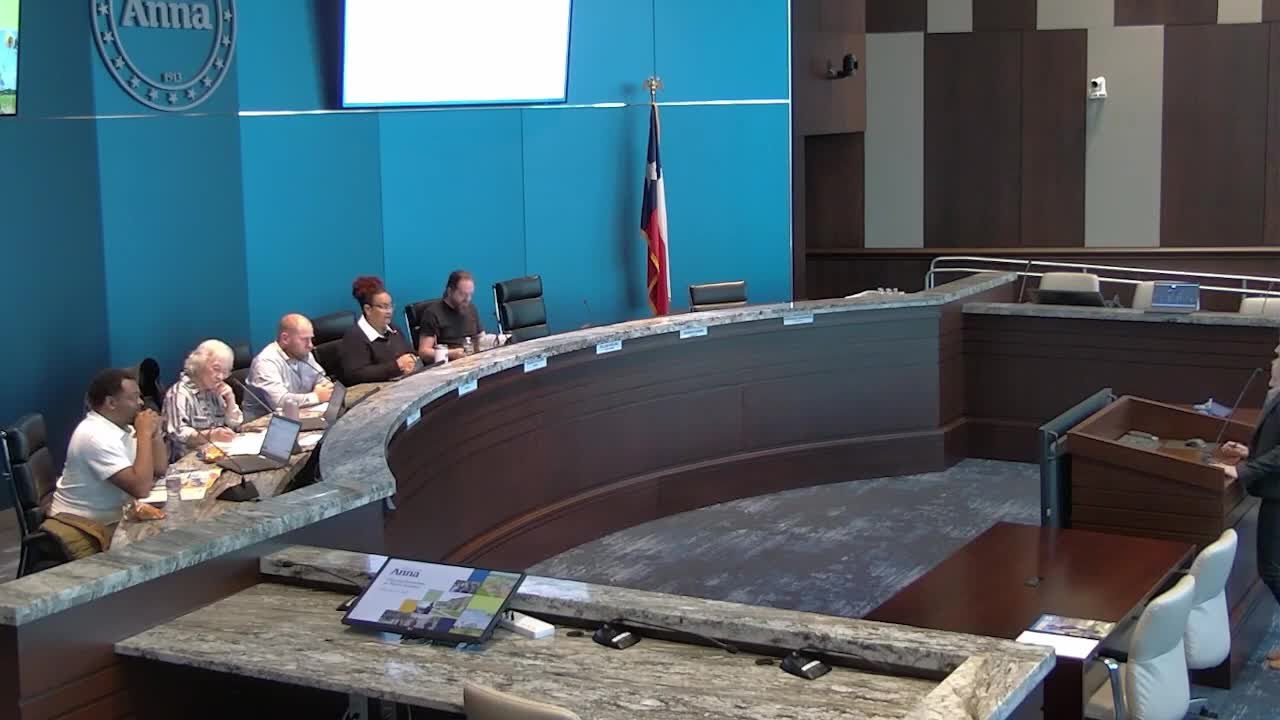
Kim Winarski of the City of Anna’s city manager’s office presented an overview of transit options the city has studied to address resident concerns about affordable transportation, particularly for seniors and people with disabilities needing medical trips outside city limits.
“Residents and neighbors have reached out to city officials and staff expressing concern about the lack of affordable transportation service, especially for seniors and those with disabilities,” Winarski said, summarizing five years of inquiries and staff review.
Winarski said staff evaluated several approaches:
- Volunteer‑led programs: previously relied on volunteer efforts and pastoral alliances when Anna was smaller, but staff concluded the liability and quality‑control risks are too great to scale as a city‑facilitated volunteer transit program.
- County and regional providers: Collin County Transit (the McKinney Urban Transit District) does not currently include Anna because its service boundaries were set based on 2020 census formulas and district lines moved west; Denton County Transit Authority declined partnership; the North Central Texas Council of Governments (NCTCOG) says rural transit district designation remains a long‑term option but is not likely in the next year or two.
- Neighboring rural or small providers: Winarski said staff contacted smaller providers recommended by the metropolitan planning organization — SCRIPT (Hunt County provider), SPAN Transit and STAR Transit — and found varying interest. SCRIPT was open to a near‑term partnership, SPAN indicated it is in recovery and would need multiple years, and STAR said Anna is not a growth target for now.
- Third‑party or private providers: staff discussed contracting with private medical‑transportation firms that might deploy vehicles to Anna, but private operators said cost‑model changes and vehicle positioning could be barriers.
- Ride‑hail voucher models and microtransit: staff evaluated an “Uber partnership” (a ride‑hail voucher program supplemented by wheelchair‑accessible vehicles), Via microtransit (on‑demand shared micro‑buses serving stops within city limits) and a city‑staffed vehicle program.
Winarski provided staff’s working cost estimates. She said one ride‑hail/voucher model would require an initial implementation cost of about $135,000 in the first year and roughly $136,000 in annual operating costs afterward. A staff‑operated, wheelchair‑accessible leased vehicle would have higher upfront lease and operation costs in the $85,000–$100,000 range annually and would require dedicated scheduling and program administration. Via‑style microtransit was described as a lower‑cost per‑ride option for on‑demand shared service but would not provide curb‑to‑curb service.
Winarski said a key obstacle is the lack of local, statistically valid ridership or need data. Staff do not have firm counts of Anna residents who need regular medical transportation or the number of seniors and people with disabilities who would use a program. She recommended the city collect data through its statistically validated community survey (conducted roughly every three years) and other outreach; the next city survey is scheduled for fall 2025 and could include customized questions about transit need.
Commissioners asked whether a single vehicle would suffice; Winarski said SCRIPT and some private providers could place one vehicle in Anna, Via would deploy no fewer than two microtransit vehicles, and the ride‑hail approach relies on distributed vehicles and contracted wheelchair‑accessible vans. Commissioners also asked whether senior‑living developers (including Parmore Senior Living Facility) provide transportation; Winarski said she would follow up to confirm whether existing and proposed senior facilities supply transit for their residents.
Winarski said Anna’s rapid population growth could change regional transit boundaries after the next census and potentially improve bargaining power with regional providers, but she cautioned that timelines are uncertain and some residents need service now.
The commission did not vote on a specific proposal. Winarski characterized the next steps as collecting accurate need data, continuing outreach to smaller providers and private partners, and returning to the commission with more analysis and cost estimates.