Get Full Government Meeting Transcripts, Videos, & Alerts Forever!
Get email alerts on the Water Quality topic
No spam. Unsubscribe anytime.
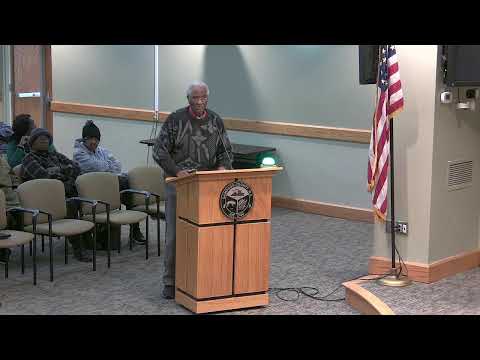
Sampson County residents tell commissioners PFAS in wells is driving urgent push for county water
Summary
Multiple residents told the Sampson County Board of Commissioners that tests found PFAS in private wells and urged the county to extend public water service; speakers described health and cost burdens and asked the board to pursue funding and infrastructure.
At a public meeting of the Sampson County Board of Commissioners, residents urged the board to act after private-well testing indicated per- and polyfluoroalkyl substances, commonly called PFAS, in parts of the county.
"We're asking you to please, get in touch with them or do what you need to do so that we might have county water," Elaine F. Hunt told commissioners. Hunt said state testing included about 16 households in her area; results were returned for 14 and, she said, about half of those showed PFAS.
The residents' comments painted a picture of ongoing expense and health concerns. "They bring out the filtration system, but they don't tell you that that filtration system is gonna cost approximately $200 annually to maintain," said Antoinette James, who identified herself as a Highsmith-area resident of Roseboro and described being without well water for 10 days. "We want to be plugged into the county line and it's like no one's listening to us," James said.
Jay Ingram, who identified himself as president of the Millside Community Watch, told the commissioners that shallow wells appear to be the ones testing positive and that deep wells so far have been OK. "But the bottom line is PFAS is still in the ground," Ingram said, adding community members had applied for county water previously and were told applications were denied twice, though he said he was not told why.
Larry Sutton, a Bearskin Road resident, urged the board to begin setting aside funds for water infrastructure, saying the problem will grow and become costlier. "This problem is not going away," Sutton said.
Speakers asked the board to pursue county water connections, grant funding or other county-led solutions to provide safe drinking water to affected households. The board did not take any formal action on the requests during the meeting and closed the public-comment period before moving on to other agenda items.
The comments reflect concerns about drinking-water safety, ongoing maintenance costs for household filtration, and the financial burden on residents who said they must use bottled water or laundromats. Several speakers asked the county to explain why previous applications for county water service had been denied and to identify next steps for affected neighborhoods.
Commissioners did not make an on-the-record decision on the water requests at this session; residents were told the board would follow up after the meeting.