Get Full Government Meeting Transcripts, Videos, & Alerts Forever!
Get email alerts on the Annexation Service Delivery topic
No spam. Unsubscribe anytime.
Hearing held on proposal to fold growth‑boundary agreements into service delivery strategy to reduce annexation disputes
Summary
Representatives heard a hearing-only presentation on House Bill 387, a concept to pilot growth-boundary agreements within the Service Delivery Strategy framework to reduce annexation disputes; the Georgia Municipal Association and Association County Commissioners of Georgia asked for more time to vet details.
The House Governmental Affairs Committee held a first hearing on House Bill 387, a proposal to enable or pilot “growth boundary agreements” between counties and cities as part of the state’s Service Delivery Strategy (SDS) framework to reduce annexation disputes, speakers said.
Chairman Thomas presented the idea as a policy born from experience in Cherokee County, where local governments negotiated a growth-boundary agreement that participants say has prevented annexation disputes for about four years. Thomas said the agreement aligns planning and density expectations between cities and counties and helps plan services for a 10-year horizon. He described the proposal as a “beginning” and said he planned to work with the Georgia Municipal Association (GMA) and the Association County Commissioners of Georgia (ACCG) to refine the concept.
Thomas told the committee the Cherokee pilot produced closer cooperation on road planning and development review and said the agreement helped avoid litigation and developers “shopping” multiple localities for favorable annexation terms. He said he hopes to bring city and county officials from Cherokee to testify in future hearings.
Members asked technical and policy questions. Representative Adesanya asked whether cities or counties typically bring annexation lawsuits; presenters explained the statutory objection/resolution process and said litigation can still occur in particular disputes. Representative Bernal and others raised geographic and governance questions, including whether the proposal applies in fully municipalized counties such as Fulton County and whether the agreement would be binding. Thomas said current local growth-boundary agreements in Cherokee are nonbinding but expressed interest in exploring binding options; he also said the bills would include an opt-out provision for areas where the approach does not make sense.
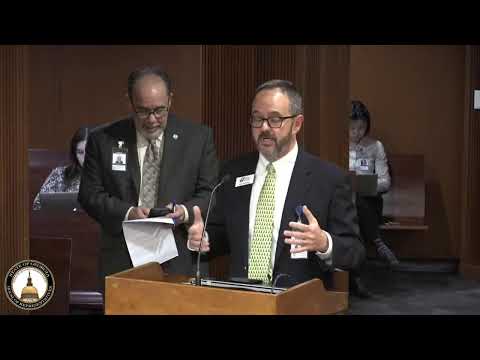
Jim Thornton of the Georgia Municipal Association and Todd Edwards of the Association County Commissioners of Georgia testified in support of further conversation but urged careful drafting. Thornton said the Cherokee approach has worked locally and that SDS is a complicated statute that varies across Georgia; he recommended detailed conversations and a decision tree to avoid unintended conflict in other counties. Edwards said the idea could reduce conflict where cities and counties are competing for development and where counties provide city-like services.
The committee did not vote; members described the hearing as the start of a multi-step process that will require input from local governments and further drafting to address differences among counties and cities, including fully municipalized counties, binding vs. nonbinding agreement terms, ten-year planning horizons, and opt-out mechanics.