Get Full Government Meeting Transcripts, Videos, & Alerts Forever!
Get email alerts on the Discipline Restorative Hiring topic
No spam. Unsubscribe anytime.
DEI committee weighs discipline coding, restorative responses and staff diversity in NKSD
Summary
Members discussed coding of hate-motivated behavior, restorative practices after incidents, possible policy or penalty changes recommended by an equity audit, and steps to increase diversity in hiring, including implicit-bias training for interview committees and outreach to educator preparation programs.
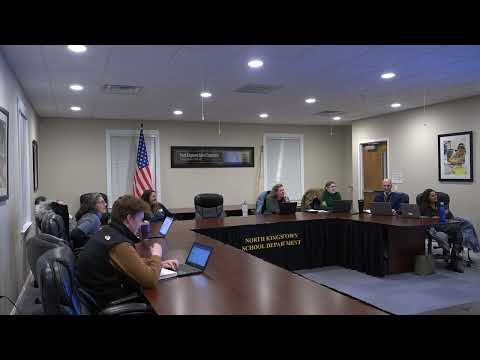
The North Kingstown DEI Advisory Committee discussed Jan. 5 how the district documents and addresses hate-motivated incidents, the role of restorative practices in response, and ways to broaden staff recruitment to improve workforce diversity.
Committee members referenced recommendations from a recent equity audit that suggested stronger penalties and clearer coding for hateful speech and behavior; they also emphasized restorative education as a primary tool to teach and prevent repeat incidents.
Why it matters: committee members said incidents of hateful speech are sometimes coded under general discipline categories rather than using a hate-motivated behavior code, which obscures the scale of the problem and complicates district tracking. Members argued for both clearer coding and for restorative interventions that require students involved in incidents to demonstrate learning (for example, an assignment, art piece or presentation) rather than relying on punitive measures alone.
Details from discussion
- The committee debated how to balance punitive measures and restorative education. Committee members said restorative mediation — bringing parties together with deans or counselors to discuss the incident — is frequently effective when staffing permits, but they acknowledged that staffing constraints can limit restorative responses.
- Members noted the equity audit urged “greater penalties for hateful speech and behavior,” which the committee interpreted as both clearer enforcement (coding and consequences) and more consistent restorative follow-up and education.
- On recruitment and hiring diversity, members discussed practical steps to broaden candidate pools: inviting volunteers (including students) to interview committees, offering implicit-bias training to interview panel members, and expanding outreach beyond traditional posting sites to educator-preparation programs in Rhode Island and neighboring states.
Next steps
Committee members proposed: verifying whether incidents are being coded using hate-motivated behavior categories; assembling guidance or a template for restorative follow-up that includes evidence of learning; and piloting changes to recruitment practices such as training interview committee volunteers and tracking applicant diversity. A committee member said she would explore using search-committee volunteers and implicit-bias training ahead of the hiring season.
Quotes
“The equity audit recommended greater penalties for hate speech behavior,” one committee member said; another observed restorative follow-up that results in student reflection or a created piece is more educational than a solely punitive response.
Ending
Committee members agreed to bring policies, coding practices and candidate-recruitment options back to the next meeting for further discussion and possible referral to the School Committee or policy advisory group.