Get Full Government Meeting Transcripts, Videos, & Alerts Forever!
Get email alerts on the City Budget topic
No spam. Unsubscribe anytime.
Avondale officials report healthy reserves but caution one‑time revenue won’t recur
Summary
City finance staff told the City Council the general fund closed fiscal 2024 well above projections, driven largely by construction‑related sales tax, but cautioned that much of that gain is one‑time and the city is budgeting conservatively for FY26.
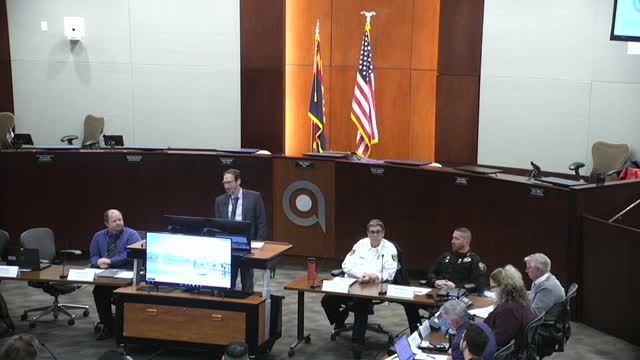
Avondale finance staff reported that the city ended fiscal year 2024 with general fund revenues about $11,000,000 higher than the March 2024 forecast, driven mainly by contracting and construction sales tax, and that the fund balance entering fiscal 2025 exceeded $120,000,000.
“We ended the year $11,000,000 above that forecast,” said Robert Baer, who gave the financial update. Finance staff also told council that some capital projects budgeted for FY24 slid into FY25, and that when carryovers are considered the effective available balance is lower by about $16,000,000.
Why it matters: Council members and staff said the city will not build ongoing programs or permanent staff positions on revenue they expect to be one‑time. Council and staff repeatedly emphasized maintaining a structural balance—ongoing revenues above ongoing expenses—while using one‑time revenues for capital projects and other nonrecurring costs.
In the update, staff outlined the assumptions used in preparing the FY26 budget: a baseline 5% combined cost‑of‑living/merit package was included in the starting point; public safety positions will receive step increases; healthcare cost increases of about 11% were included; and the market study funding was set aside though the final adjustments from the study are not yet known. Andy, from benefits and compensation staff, said the market study showed the majority of city positions are within market range and roughly 20% of jobs will be reviewed more closely.
Sales tax remains the largest general fund revenue source. Staff said retail sales tax growth has flattened compared with pandemic years but contracting/construction sales tax was 43% above prior year actuals and 17% above forecast as of the midyear review. Council members cautioned that contracting activity is cyclical and not a reliable long‑term base.
Staff noted an expected loss of residential rental sales tax beginning in January under the state’s recently implemented flat tax, which will reduce a component of sales tax revenue by several million dollars; staff estimated the long‑term loss at roughly $5–6 million but said some commercial rental tax will remain. State shared revenue from income tax is also down relative to prior year actuals due to the state tax change.
The city’s FY25 starting budget included $511,000,000 in funded capital improvement program (CIP) projects, 13.4 additional full‑time equivalents, and $13,300,000 in supplemental budget additions from the prior adoption. Midyear, general fund revenues were reported roughly $3,600,000 above budget and $8,700,000 above the prior year actuals.
Council and staff outlined next steps and timeline: department budget meetings were underway; staff will return in February with utility‑rate information and in April with a recommended budget; tentative and final budget adoptions are planned for May–June ahead of the statutory adoption deadline.
Council direction and caution: multiple council members stressed conservative budgeting and said they will not rely on one‑time contracting revenue to fund permanent programs. Staff likewise said the forecast maintains a structural balance across the five‑year plan, and that additions to ongoing expenses would reduce long‑range reserve projections (for example, a $1,000,000 ongoing increase would reduce a projected 2030 reserve by about $5,000,000).