Get Full Government Meeting Transcripts, Videos, & Alerts Forever!
Get email alerts on the Transportation topic
No spam. Unsubscribe anytime.
Eastern Loudoun Transportation Study update: 49 of 102 missing‑link segments built; eight segments prioritized for CIP review
Summary
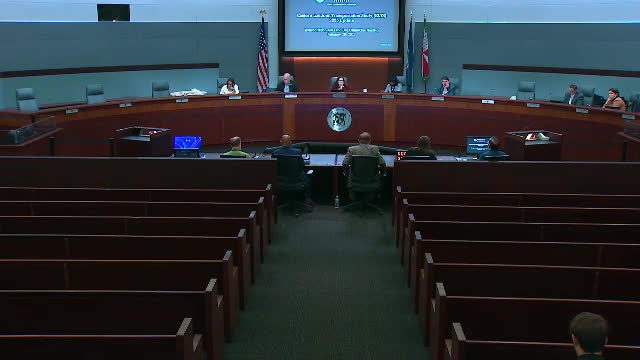
DTCI staff briefed the Transportation and Land Use Committee on Feb. 20 on an update to the Eastern Loudoun Transportation Study, reporting that 49 of the 102 original "missing link" segments have been built and identifying eight high‑priority segments for future CIP discussion.
DTCI staff briefed the Transportation and Land Use Committee on Feb. 20 on an update to the Eastern Loudoun Transportation Study (ELTS), the county's assessment of missing links and bottlenecks generally east of Belmont Ridge Road and North Star Boulevard. The update reviewed progress since the study's 2012 origin, incorporated segments added in the 2019 Countywide Transportation Plan (CTP) update, and recommended priority segments for future CIP consideration.
The update matters because the ELTS helps the county sequence transportation investments and prepare candidate projects for the CIP; staff told the committee that many prioritized remaining segments are in the Dulles South area, which has seen significant growth since 2012.
Lou Moserak, assistant director at DTCI, introduced the presentation and outlined the historic context: the county began active CIP planning around 2012 and identified 102 missing links and bottlenecks east of Belmont Ridge Road. "To prepare and plan for these funding opportunities, the county initiated the Eastern Loudoun Transportation Study," Moserak said. Kelly Griffin, special projects manager, described the update process: staff removed 49 constructed segments from the original list, combined remaining segments with those added in the 2019 CTP (noted with an "A" prefix), and used both quantitative and qualitative screens to prioritize projects.
Key numbers from staff's analysis: 102 original ELTS segments identified in 2012; 49 constructed since then; 53 segments carried forward into the 2025 update; staff developed a composite list and identified eight segments ranked for priority and future CIP discussions. Staff said some segments were not carried forward because they are anticipated to be delivered through alternate methods (for example, private development or regional coordination), require jurisdictional coordination, or were reclassified in the 2019 CTP and placed in a "no longer applicable" category.
Griffin said the prioritized segments were largely in the Dulles South area and that Route 50 improvements were ranked using the Route 50 Long Term Improvements and Sequencing Corridor Study approved by the board in October 2023. The presentation noted an expected dip in production in FY2026 with an uptick in FY2027 and beyond tied to delivery timelines for low‑income housing tax credit developments and other multifamily projects that affect travel demand.
Committee members asked for greater clarity and accuracy in the tables and requested staff follow up. Vice Chair Turner and members said they would provide a line‑by‑line list of potential errors and formatting suggestions; Turner proposed withholding endorsement of the prioritized list until staff respond to those points and provide clarifications. Staff agreed to return with responses and initial follow‑up at the committee's March meeting.
Moserak and Griffin reminded the committee that the ELTS update is intended to inform CIP deliberations and is not a substitute for project‑level updates or the upcoming comprehensive CTP review; staff said that prioritized segments would be considered for placement in future CIP deliberations if the board directs it.