Get Full Government Meeting Transcripts, Videos, & Alerts Forever!
Get email alerts on the Housing topic
No spam. Unsubscribe anytime.
Loudoun County staff report mid‑plan progress on unmet housing needs; third‑party evaluation planned
Summary
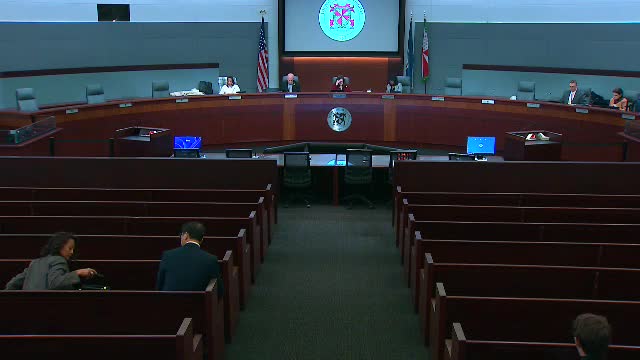
Loudoun County Department of Housing and Community Development staff presented a mid‑plan update on implementation of the county's Unmet Housing Needs Strategic Plan during the Transportation and Land Use Committee meeting on Feb. 20.
Loudoun County Department of Housing and Community Development staff presented a mid‑plan update on implementation of the county's Unmet Housing Needs Strategic Plan during the Transportation and Land Use Committee meeting on Feb. 20. The presentation covered results from the first and second quarters of fiscal year 2025 (July 1'Dec. 31, 2024) and described a planned third‑party evaluation of the plan.
The update matters because the strategic plan establishes measurable targets and 133 key actions to expand attainable housing through 2040; the county is three years into implementation and staff said an evaluation is needed to improve performance tracking, align metrics with regional targets and forecast the county investment required to meet goals.
Christine Hillock, Housing Initiatives Project Manager, summarized recent board actions and program changes adopted last year. The board approved amendments to the county's Down Payment and Closing Cost assistance program (DPCC) and the Public Employee Homeownership Grant (PEG) program on Sept. 4, 2024. Hillock said, "Changes to the DPCC program include an increase in the amount of assistance from $25,000 to $75,000 or up to 10% of sales price, whichever is less, and a change in the structure of the assistance from a 30 year interest bearing loan to a 15 year interest free forgivable loan." She added that the PEG maximum increased from $10,000 to $25,000 or up to 10% of sales price, and that the board established a new DPCC Plus program to serve households with incomes up to 100% of area median income.
Brandy Collins, Housing Policy Administrator, said the department will hire a third‑party consultant to evaluate housing targets, performance metrics, demand forecasting and fiscal impacts. "Through this project, we will evaluate housing targets, analyze our performance metrics, forecast housing demand and potential supply, [and] project levels of county investment needed to accomplish the existing goals," Collins said. Staff said the contract is expected to run about nine months with a one‑year agreement available if timing shifts or additional work is requested by the board.
Staff reviewed plan progress and results for the fiscal year. The plan includes annual targets for new construction and for access to or preservation of attainable units for households earning up to 100% AMI. For FY 2025 the plan's targets are 350 new attainable units and 150 access or preservation opportunities. Staff reported 95 new units and 69 access/preservation opportunities in the first quarter and 61 new units and 65 access/preservation opportunities in the second quarter. Staff said the county has reached 44.6% of the annual new construction target and 89.3% of the access/preservation target halfway through the fiscal year.
Hillock and Collins explained that the county's counting methodology has caused some double counting across categories (for example, a unit newly constructed and also supported with a county down payment award can appear in both the "new construction" and "access" tallies). Collins said the evaluation will include performance tracking improvements to avoid overcounting or undercounting.
Staff also provided program level activity since the board changed DPCC loan terms and increased maximum awards. Staff reported six DPCC awards (average ~ $22,000), two DPCC Plus awards (average ~ $48,000) and one public employee grant (about $20,000) in the six months since program changes.
Committee members pressed staff on allocation and fund balance questions. Staff pointed to Attachment 2 in the packet showing a housing trust balance of approximately $28 million as of Dec. 31, 2024; staff said a proposed 1'cent transfer on the real property tax rate would add about $17.3 million to the housing fund in the budget recommendation (the deposit is a separate budget action and was not adopted at this meeting). Staff also summarized the earlier history of the cigarette tax and real property tax proposals and how those revenue choices landed in the current budgeting approach.
Supervisors asked whether expanding assistance to households above 70% AMI (the DPCC Plus program) could risk federal funding streams; staff said they have coordinated with HUD and had not seen any indication federal funds to the county would decrease. Supervisors asked about targeting closing cost assistance toward income tiers most likely to sustain homeownership; staff reiterated program eligibility and the three program tiers administered by DHCD: DPCC (30'70% AMI), PEG (public employees, 30'70% AMI), and DPCC Plus (70'100% AMI).
Committee members also discussed other implementation options: land banking, partnerships with faith‑based organizations and nonprofits, and whether the county should create a housing authority or contract with an existing authority to operate housing programs. Staff said the board has directed analysis of contracting opportunities with an external housing authority but has not directed staff to evaluate establishing an in‑house Loudoun County Housing Authority. Several supervisors requested a comparative cost/benefit analysis (in‑house housing authority versus contracting) and staff said they would bring that comparison to the full board if the committee directs it.
The committee concluded the housing presentation by asking staff to return with the proposed consultant scope, timing and any fiscal implications as part of follow‑up work. That planned evaluation will also be reported to the Housing Advisory Board and the Board of Supervisors through the Transportation and Land Use Committee.