Get Full Government Meeting Transcripts, Videos, & Alerts Forever!
Get email alerts on the Education Health Early Development topic
No spam. Unsubscribe anytime.
Sponsor seeks to require age‑appropriate fetal development videos, resources in schools under "Baby Olivia Act"
Summary
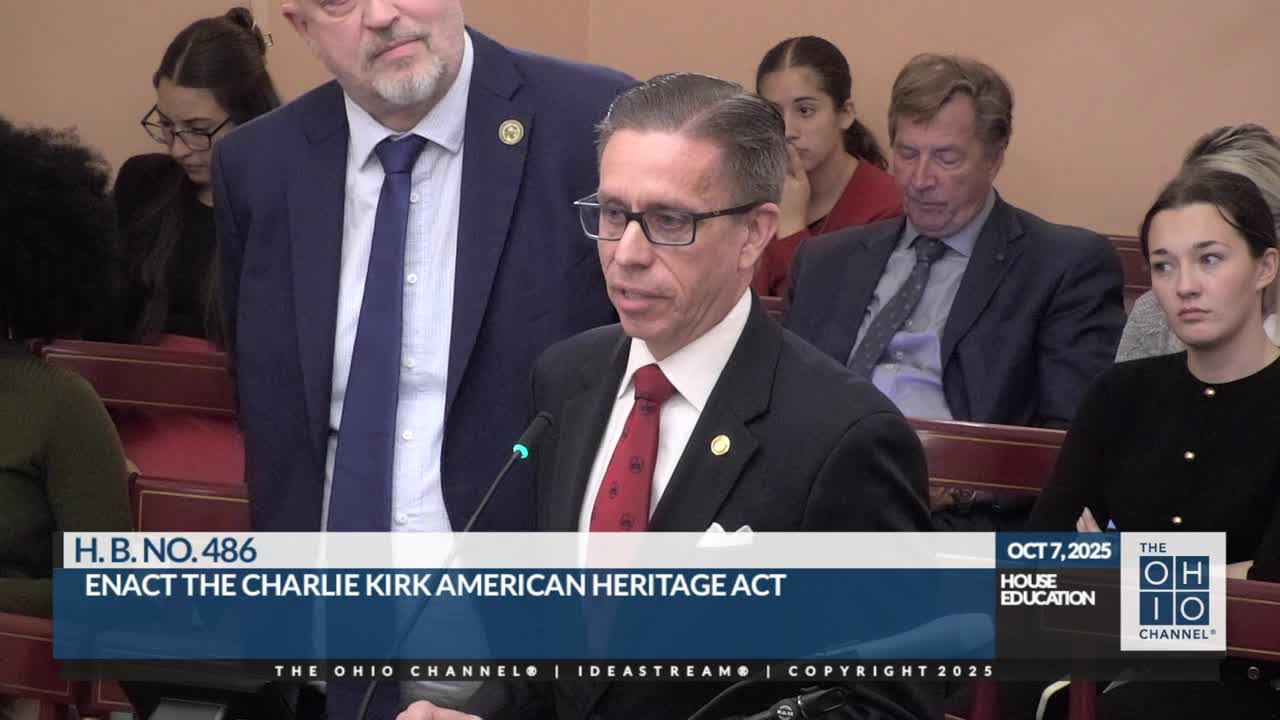
Representative Miller presented sponsor testimony for House Bill 485, the Baby Olivia Act, which would require Ohio public schools to include specified, age‑appropriate resources on early human development in health classes for grades 3–12.
Representative Miller presented sponsor testimony for House Bill 485, the "Baby Olivia Act," which would require Ohio public schools to incorporate specified resources into health education to teach early human development. Miller said the bill aims to provide a "science based, age appropriate understanding of early human growth and development in grades 3 through 12" and asked the committee to consider the resources as a way to improve students' factual knowledge of prenatal development.
Miller described two minimum resources for districts to include: a high‑definition ultrasound video of fetal organ formation of at least three minutes, and the ‘‘Meet Baby Olivia’’ animated video that depicts fertilization and early stages of development. Miller said the video was produced with medical experts and partner organizations, including the Endowment for Human Development and distribution partners such as National Geographic, and that the Department of Education and Workforce (ODEW) would maintain an approved list of materials for districts.
Committee members asked about naming specific materials in statute and possible constitutional limits on giving a single private vendor a statutory preference. Ranking Member Brennan raised a concern that the bill as written names Live Action and a specific product and suggested a broader standard or a process for ODEW to approve qualifying materials instead of a single named vendor. Miller said he was open to an amendment allowing the Department to approve a list of qualifying materials and to provide parents with advance notice and opt‑out options. "I would not be opposed to that at all," Miller said regarding written notice and opt‑out.
Members also asked about peer review and medical accuracy. Miller said medical professionals who assist his pregnancy‑care work reviewed the video and he would provide the committee with documentation of medical contributors; he said the video’s content was developed with embryology and fetal‑development experts. The bill establishes an audit requirement and references potential enforcement through the Attorney General if districts do not comply with the statute as written; Miller said he would consult with the Attorney General’s office on enforcement language. No committee vote occurred during the first hearing.