Get Full Government Meeting Transcripts, Videos, & Alerts Forever!
Get email alerts on the Education Hair Discrimination topic
No spam. Unsubscribe anytime.
House committee hears sponsor testimony for Crown Act to bar K–12 hair discrimination
Summary
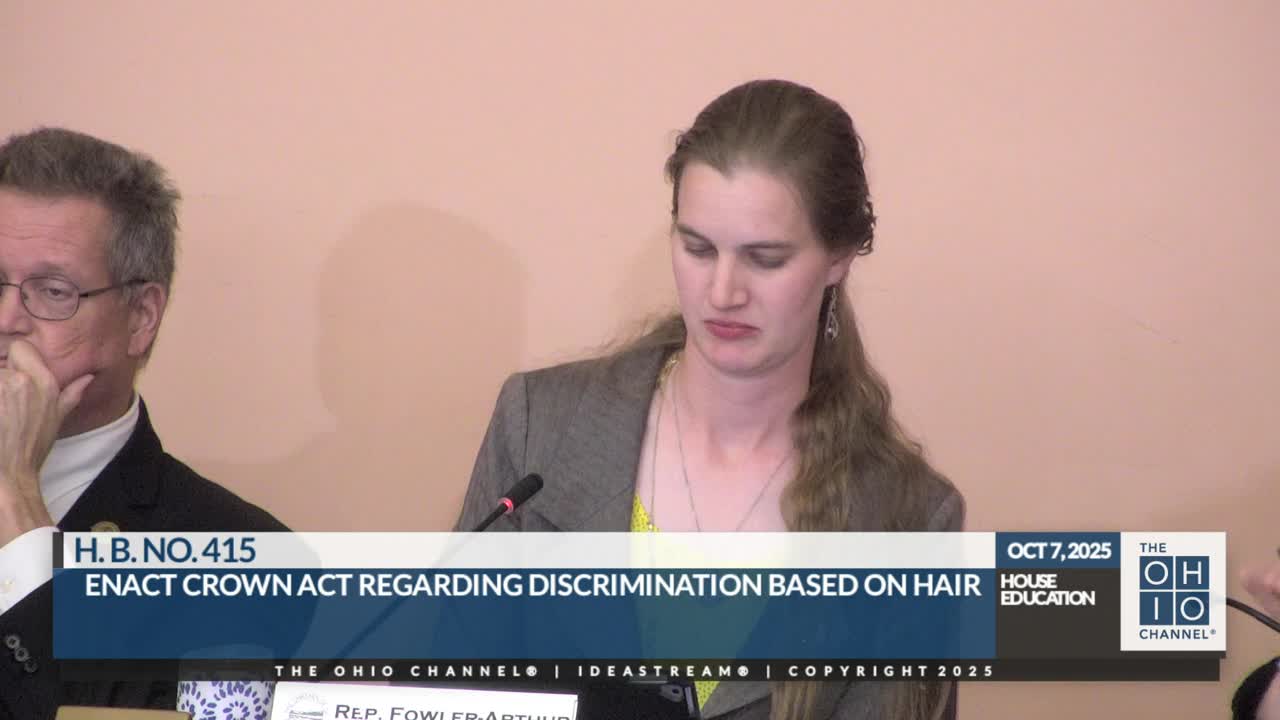
Representatives Brent and Callender offered sponsor testimony on House Bill 415, the "Crown Act," which would prohibit K–12 public schools in Ohio from discriminating against students based on hair texture or protective hairstyles. The bill received questions on outreach, enforcement and whether it should extend to private schools; no formal vote
Representative Brent offered sponsor testimony during the first hearing on House Bill 415, the Crown Act, telling the House Education Committee the measure would "prohibit our public school educations from K to 12, specifically, from discrimination based on hair texture." Brent said the bill is being introduced for a fourth time and argued that current Ohio law provides no recourse for students disciplined for wearing natural or protective hairstyles.
The bill's sponsors described examples of students sent home for wearing Afro puffs and wrestlers required to cut locks, and urged the committee to act early in the session so the measure can reach the Senate. "This is about fairness, respect, equality," Brent said. "By passing this bill, we affirm that diversity in our schools should be celebrated, not punished." Representative Callender, a joint sponsor, added personal and constituent anecdotes about students told their family traditions "weren't allowed in school."
Committee members asked how families and students would learn about rights under the Crown Act and how enforcement would work. Brent said discrimination under the bill would allow filing through the Equal Employment Opportunity Commission process used for discrimination complaints today and that school boards and their training programs would play a role in educating local officials. "I think a lot of our students and families don't realize the restriction exists," Brent said.
Ranking Member Brennan asked why the bill would apply only to public schools and not private schools that receive public funds; sponsors said earlier versions covered a wider range but the current text is a compromise limited to public K–12 because of concerns about constitutional or contractual limits for private institutions and voluntary admissions to certain academies (for example, military academies with strict dress codes).
Sponsors and committee members discussed the bill's legislative history: proponents said the measure previously passed the House but did not advance in the Senate last session, and urged swift movement out of committee this year. No final action or committee vote occurred during the hearing; the committee treated the appearance as a first hearing with sponsor testimony and questions.
The committee will consider proponents and opponents at future hearings; sponsors asked the committee to schedule follow-up testimony from supporters and stakeholders.