Get Full Government Meeting Transcripts, Videos, & Alerts Forever!
Get email alerts on the Criminal Penalties Vehicular Manslaughter topic
No spam. Unsubscribe anytime.
Panel backs stiffer maximum sentences for vehicular manslaughter in ''Jamari's Law' testimony
Summary
Supporters including victims' family members and MADD told the Judiciary Committee that House Bill 977 would let judges impose longer sentences for vehicular manslaughter (manslaughter by vehicle or vessel) where offenders are convicted of violent conduct, increasing maximum terms to 20 years for first offenses and 30 for repeat offenders.
Delegate Brian Crosby introduced House Bill 977, called "Jamari's Law," after Jamari Duckett, an 18-year-old St. Mary's County resident killed in a 2022 crash. Crosby and family members testified that the bill would increase the maximum sentence for manslaughter by vehicle or vessel (currently 10 years for a first offense and 15 for repeat offenders) to 20 and 30 years respectively.
Family members of Jamari Duckett testified about the circumstances of his death and urged the committee to allow courts greater sentencing discretion. Several county prosecutors and the Mothers Against Drunk Driving (MADD) regional director also testified in support, citing increases in impaired-driving crashes and the need for stronger deterrence. State's attorneys described cases of repeat drunken-driving offenders and asked for more tools.
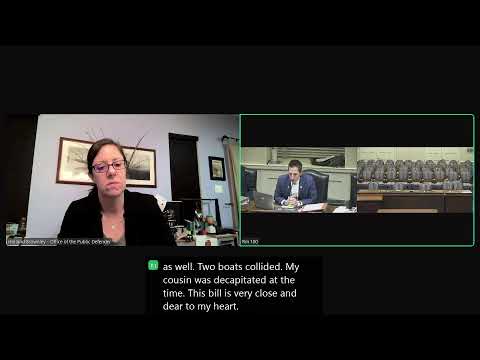
The public defender opposed the bill, arguing that existing statutes already criminalize negligent and grossly negligent vehicular conduct and that longer maximum penalties would not reduce fatal errors and could encourage excessive incarceration. The public defender said Maryland already prosecutes vehicular killings under manslaughter and reckless endangerment statutes and noted a range of criminal statutes are already available.
Committee questions focused on whether the change would be redundant with existing criminal law (manslaughter and DUI-related statutes) and whether extending maximum penalties would materially change outcomes in sentencing. Delegate Crosby and prosecutors said the change would not create a mandatory minimum but would give judges a broader range for cases involving aggravated facts (repeat offenders, high-speed crashes, or intoxication) so sentences better match the harm.
No vote was recorded during the Feb. 19 hearing. The bill drew emotional testimony from family members and divided views from defense and prosecutorial witnesses.
Provenance: Committee transcript, Feb. 19, 2025.