Get Full Government Meeting Transcripts, Videos, & Alerts Forever!
Get email alerts on the Tort Reform Non Economic Damages topic
No spam. Unsubscribe anytime.
Maryland debate resumes over cap on non-economic damages after extended testimony
Summary
Delegate Natalie Ziegler presented House Bill 113, proposing repeal of Maryland's cap on non-economic damages in personal injury and wrongful death cases.
Delegate Natalie Ziegler opened the Judiciary Committee hearing on House Bill 113 by asking the panel for a favorable report on her bill to repeal Maryland's cap on non-economic damages in personal injury and wrongful death cases.
Her testimony and a lengthy panel that followed framed the dispute as a choice between restoring juries' full authority to compensate victims for pain and suffering and preserving a state limit lawmakers put in place when Maryland faced an insurance crisis decades ago.
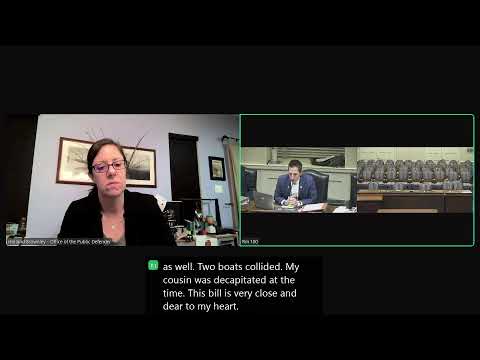
Supporters included plaintiffs' attorneys, victims and advocacy groups who described cases in which juries awarded large sums for non-economic losses that were later reduced under the cap. Gwen Marie Davis of the Maryland Association for Justice and several trial lawyers recounted verdicts that, they said, were reduced and left seriously injured people with much smaller recoveries. Several witnesses said the cap disproportionately reduces awards for women, older people, racial minorities and low-wage earners because economic damages (lost wages) are smaller for those groups.
"There was a verdict in Maryland where a woman was awarded $2,300,000 in non-economic damages and the verdict was slashed as a result of the unfair caps," said Gwen Marie Davis.
Panelists representing businesses and insurers strongly opposed repealing the cap. They said actuarial modeling and testimony before the Maryland Insurance Administration show removing or raising the cap could raise loss costs and insurance premiums, reduce availability of certain coverages and increase costs for local governments and transportation agencies. The insurance industry presented an actuarial estimate (for raising the cap in a prior year) showing double-digit percentage increases in some lines of liability coverage, with the largest projected rise for commercial auto.
Several members of the committee pressed both sides for empirical data. Supporters pointed to studies and law-review articles they had submitted as exhibits and to individual jury verdict examples. Opponents urged more comprehensive, independent actuarial analysis and noted that 39 states and the District of Columbia have no cap; they argued other factors (car repair costs, litigation trends) influence premium trends.
Committee members asked practical questions about how a cap change would affect typical crash cases, uninsured or underinsured drivers, and plaintiffs with modest insurance limits. Witnesses described common practice: insurers typically pay policy limits (for example a $1 million policy) and, in rare cases, may be responsible for excess where bad-faith conduct is proved. Several plaintiffs' lawyers said the cap discussion matters most in catastrophic cases where the jury's valuation of pain and suffering is the bulk of a plaintiff's recovery.
No committee vote was recorded at the hearing. Testimony stretched across more than two hours of debate, with proponents emphasizing perceived injustice and defendants emphasizing potential market and fiscal impacts.
Supporters asked the committee to consider repeal or a significant increase in the cap; insurers and business groups urged caution and additional cost studies before changing the statutory limit.
Where it stands: Committee testimony completed; members have additional materials and exhibits that were offered by both sides. No final action was taken during the Feb. 19 hearing.
Sources: Committee hearing transcript, Feb. 19, 2025; testimony submitted into the hearing record.