Get Full Government Meeting Transcripts, Videos, & Alerts Forever!
Get email alerts on the Farm Stands Ordinance topic
No spam. Unsubscribe anytime.
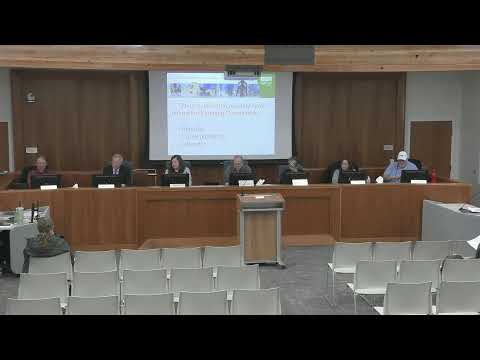
Kaysville planning commission backs ordinance to allow seasonal farm stands in residential and agricultural zones
Summary
The commission voted to recommend the City Council enact Kaysville City Code Title 17, Chapter 31-5 to permit temporary farm stands as conditional uses, with rules on duration, signage, on-site operation and packaged goods.
The Kaysville City Planning Commission unanimously recommended that the City Council enact a new section of the city code (proposed Title 17, Chapter 31-5) to allow seasonal farm stands as a conditional use in residential and agricultural zones, after a lengthy public hearing and discussion on limits, public safety and operational details.
City planning staff presented a draft text amendment that would add a chapter to the zoning code permitting temporary farm stands to sell food crops, ornamental crops and packaged cottage-food items. Staff framed several discussion points for the commission, including whether products sold must be produced exclusively on the stand site (option A) or could include products grown elsewhere in the city (option B); how long a temporary stand may operate in a calendar year; whether operators must be present on-site during hours of operation; and what signage and operational safeguards should apply.
Applicant Bridal Van Brocklin, who identified herself as the owner of Cherry Petals Farm, told commissioners she had sought the change because current code generally prohibits retail sales from residential parcels. “I’ve been wanting a farm stand forever,” she said, and described small-scale flower farming and the desire to allow neighbors to sell or share products without creating larger commercial operations.
Commission discussion centered on two recurring concerns: neighborhood impacts (particularly traffic and safety where customers might pull onto narrow streets) and enforceability of on-site production rules. Several commissioners and the applicant expressed support for option B — allowing goods grown elsewhere in Kaysville to be sold at a farm stand operated from a site inside the city — provided operations remain limited in scale and reviewable through the conditional-use process. Staff emphasized the proposal already requires a site plan and that the conditional-use review would be the mechanism to address safety, parking and traffic concerns.
Key points the commission discussed and incorporated into the recommended approach: - Duration: staff recommended a temporary-use limit of 180 consecutive days in a calendar year; commissioners signaled support for 180 days as a reasonable seasonal window while leaving room for staff and the city attorney to refine start/stop language in the ordinance. One public commenter suggested wording such as a “180-day interval.” - Signage: the draft was revised to allow non-illuminated temporary signs (maximum 15 square feet) placed no more than 25 feet from the stand and removed outside hours of operation; signs must not be placed in the public right-of-way. - Product and structure limits: products must be removed from the site outside operating hours; permanent structures for retail uses are prohibited; packaged foods sold at stands must comply with the state cottage-food regulations; the sale of unpackaged animal products (for example, raw eggs) is not included under the cottage-food provisions and would not be allowed under the draft. - Owner/operation: the commission favored a practical approach that allows the legal occupant or household members to operate the stand and to provide a mobile contact number rather than mandating the owner be present at all times. Staff noted this aligns the farm-stand rules with major home-occupation standards regarding who may operate a use. - Zoning: staff proposed, and the commission agreed, to allow farm stands as conditional uses in agricultural and lower-density residential zones and to extend the allowance to R2, R4 and RM where parcels meet setback and parking requirements; the conditional-use review will assess feasibility on individual properties.
After accepting several staff redlines discussed in the meeting, a commissioner moved that the Planning Commission recommend the City Council adopt the proposed Title 17, Chapter 31-5 with the revisions discussed. A second was entered and the motion passed. Staff will finalize ordinance language and return the item to the City Council as a recommendation from the Planning Commission.