Get Full Government Meeting Transcripts, Videos, & Alerts Forever!
Get email alerts on the Enforcement And Legislation topic
No spam. Unsubscribe anytime.
Board reviews agreed-citation complaint process, legal report and readies rulemaking hearing; legislature orders economic study on barbering and cosmetology
Summary
The board reviewed a centralized agreed-citation complaint protocol, approved a 77-case legal report, scheduled a rulemaking hearing for April 7 and was briefed on legislation directing an economic impact study of barbering and cosmetology professions.
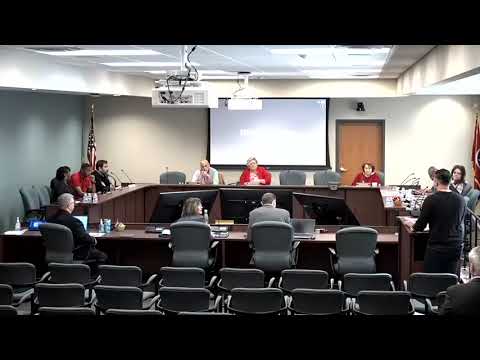
The Tennessee State Board of Cosmetology and Barber Examiners on Feb. 3 reviewed its agreed-citation complaint process, approved the legal report and learned the legislature has directed a statewide economic study of barbering and cosmetology.
Legal counsel Michael Underhill told the board the legal report contains 77 cases (58 cosmetology, 11 barber, 7 representational entries) and highlighted that a third-offense expired shop license carries a $1,000 civil penalty plus any separate individual license penalties. "On item 2, since that is a 3rd offense expired shop license, that would be a $1,000 civil penalty on its own," Underhill said, adding the total civil penalty could be higher when combined with individual penalties. The board reviewed the report and approved it by voice vote.
Executive Director Roxanna Gamusio led a discussion of the agreed-citation complaint path, a standardized set of recommendations (letters of warning, instruction, or civil penalties) used to resolve routine violations without sending every case to legal. Gamusio said the system originally rolled out in 2014 and was revised in 2015 to ensure consistent centralized handling of common complaints such as expired licenses or sanitation issues. She told members that about 40% of complaints resolve through the agreed-citation process and noted the respondent is not required to sign the agreement; unsigned cases proceed to legal.
Board members discussed consequences for repeat unlicensed activity and whether thresholds should be changed. Gamusio summarized prior board guidance: repeated instances of unlicensed activity may trigger stiffer action, up to recommending a change in shop ownership. "If you have unlicensed activity, not the expired license, truly unlicensed people, and that third time you have those unlicensed pieces, your shop probably should change ownership," Gamusio said.
The board also received procedural and legislative updates from staff. Joe (board staff) briefed members that Senate Bill 0358 and House Bill 0362 would direct the Tennessee Advisory Commission on Intergovernmental Relations to conduct an economic impact study of barbering and cosmetology in Tennessee — a fact-finding mission to quantify revenue and economic contribution and to deliver results to the legislature. "Essentially, it's not anything that would change our laws. It is simply the legislature wanting to look at the economics of the two professions and then putting a study together," Joe said.
Staff informed members that a large rulemaking package is ready for a formal rulemaking hearing at the board's next meeting, scheduled for April 7, 2025, with the hearing set to start at 11 a.m. The secretary of state's rule-posting was noted as publicly available online; Joe gave the file path for the posting and said the department will issue a notification with the rules attached prior to the hearing.
During public participation, a school owner asked whether the testing vendor PSI must report pass/fail analytics to the board. Gamusio and staff said board statute and the board's contract with the vendor do not require the vendor to forward those reports automatically to the department, though schools and the board may obtain pass/fail statistics. Staff recommended contacting Sean Conder for testing analytics; Gamusio said schools receive test statistics on their own reports and that staff can request data as needed.
Ending The board approved the legal report, accepted the agreed-citation protocol review for record, and set a rulemaking hearing for April 7. Staff will draft any legal documents directed by the board and circulate rule materials and public-notice information ahead of the rulemaking hearing.