Get Full Government Meeting Transcripts, Videos, & Alerts Forever!
Get email alerts on the Land Use Zoning topic
No spam. Unsubscribe anytime.
Lakeville ZBA hears peer-review findings, traffic monitoring plan for Granbury Heights at 43 Main St.
Summary
The Town of Lakeville Zoning Board of Appeals heard peer-review engineers report closure of most technical comments on the Granbury Heights 43 Main Street development and discussed a five‑year traffic monitoring program overseen by MassDOT; the board directed petitioner and counsel to draft a comprehensive decision and continued the hearing to Jan.
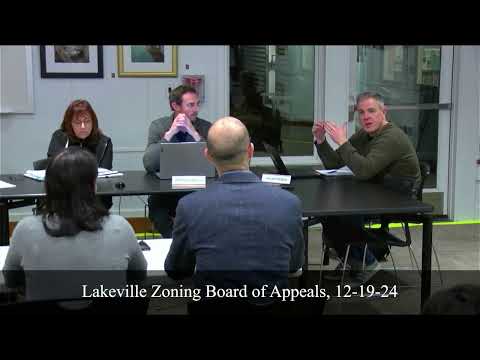
The Town of Lakeville Zoning Board of Appeals on Dec. 19 heard peer-review engineers say most technical comments on the Granbury Heights proposal at 43 Main Street have been closed and discussed a five‑year traffic monitoring program overseen by the Massachusetts Department of Transportation.
John O'Leary, representing the project applicant, told the board that the applicant had responded to comment letters from the board's peer reviewers and revised plan sets. "We received a comment letter from Apex Engineering on November 20. VHB responded to those comments ... and then a second comment letter from Apex Engineering was issued on December 17, which, by our understanding closed out comments related to civil, and transportation," O'Leary said.
Why it matters: the board must determine whether technical peer-review concerns remain before issuing or conditioning a decision. Closure of civil, transportation and landscape peer-review comments moves the project closer to final disposition, but several state-level reviews and a monitoring plan remain active.
Apex Engineering's peer-review representatives told the board their civil and transportation comments are closed. "We submitted our first peer review letter to the applicant, and they responded to all of our comments. All of our items have been closed out in terms of civil site," said Liz Ennis, a professional engineer responsible for the civil site peer review. Steve Shikari, who conducted the transportation review, said the recent round of comments required only minor edits and those items were closed.
The project team is also working through a landscape peer review by Radnor Design. O'Leary said the project received a December 16 Radnor letter, responded on Dec. 17, and received follow-up correspondence on Dec. 18 that substantially closed landscape comments; the applicant will submit revised landscape plans shortly.
O'Leary said the project remains under a three-step review process that includes MassDOT, the Massachusetts Department of Energy Resources and the Department of Environmental Protection. "We have a 3 step NEPA process ... We're 2 steps through that process. Our third and final filing will be at the end of this calendar year," he said.
Traffic and monitoring: members of the public and board asked detailed questions about traffic impacts at nearby intersections and how the project will be monitored after opening. John Berry of Bardelli Road asked whether the traffic study incorporated noise; the peer reviewer and applicant's team said the traffic study did not include a noise analysis. "The traffic study did not incorporate noise," Ennis said.
The applicant's traffic engineer described a post‑occupancy monitoring program. "We are committed to 5 years of traffic monitoring," said Matt Keeley, the project's traffic engineer. Keeley said monitoring would at minimum include counts at the project's site driveways, that data would be submitted annually to MassDOT for five years, and that monitoring would begin six months after initial occupancy to allow the development to normalize.
Keeley said MassDOT has the authority through its review to require additional mitigation if monitoring shows traffic impacts exceed projections. "If there were some drastic difference, MassDOT could come back to us and say, well, you need to do more, you know, TDM measures," Keeley said, using the common acronym for transportation demand management.
On levels-of-service at the nearby Bridge and Main (Bridal Street) intersection, Keeley said existing conditions show delay: the critical movement had a level of service D during weekday mornings and an F during weekday evenings, and the study showed negligible increases in delay with the project. "It remains at those levels under a future no build and build conditions," he said, adding that MassDOT "did not apparently see necessary any off‑site mitigations as a result of this project."
Board direction and next steps: the board and the applicant's counsel agreed counsel will begin drafting a comprehensive decision that captures the record, plans and conditions discussed in hearings; the draft will be coordinated with town counsel Amy Quassel. The board voted to continue the Granbury Heights hearing to the board's Jan. 28 meeting to allow submission of revised landscape plans and to permit drafting and circulation of the decision materials.
Meeting context: the board referenced a prior hearing on Nov. 21 and the recent sequence of peer-review letters between Nov. 20 and Dec. 18. Several peer-review comment threads were described as closed; landscape revisions remain to be filed. The applicant also committed to the MassDOT‑overseen five‑year monitoring program to compare actual trip generation with study estimates.
The board's discussion was procedural and technical; no final project approval or conditions were adopted at the Dec. 19 hearing.
The board continued the Granbury Heights hearing to Jan. 28, 2025, and asked the applicant and its counsel to coordinate with town counsel on a draft decision to be returned to the board for further action.