Get Full Government Meeting Transcripts, Videos, & Alerts Forever!
City and county detail homelessness system, needs and funding request; HSAC to seek $1.2M from city and $1.2M from county for next fiscal year
Summary
City and county staff briefed the Joint City–County Committee on homelessness system operations, current capacity and gaps; the Homeless Services Advisory Committee (HSAC) recommended asking the city for $1.2 million and the county for $1.2 million in the FY26 budget cycle to expand diversion, outreach, flexible subsidies, shelter capacity and day‑center services.
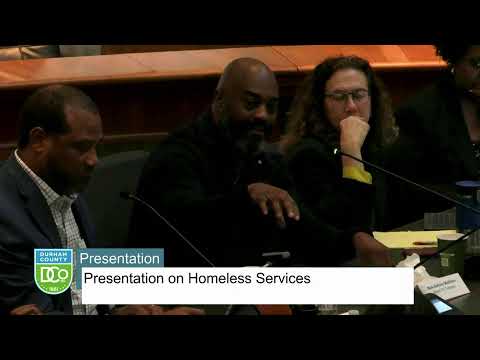
City and county staff gave a detailed briefing on homelessness in Durham and on current gaps in shelter, rapid rehousing and permanent supportive housing. City Community Development Director Reginald J. Johnson introduced the overview; Colin Davis, the city’s homeless manager, explained system definitions, program rules and local data; and Samantha Smith, special projects coordinator in the county manager’s office, summarized Durham County investments and supports.
Key data and system points presented
- Coordinated entry: Entry Point Durham (phone and in‑person at the Health and Human Services building) is the central intake that triages people into the Homeless Management Information System (HMIS) and refers to diversion, emergency shelter, rapid rehousing or permanent supportive housing. - Current waits and point‑in‑time: Staff reported roughly 50 single adults and 51 families waiting for emergency shelter at a recent update (about 100 households seeking shelter). The community’s 2024 point‑in‑time count recorded about 72 unsheltered people on a single night and a little over 400 people experiencing homelessness overall. - Program rules: Permanent supportive housing (CoC/HUD funded) is limited to households meeting HUD’s chronic‑homeless definition and requires a documented disabling condition. Rapid rehousing is short‑to‑medium term assistance (up to 24 months in a 36‑month period by federal rule). Street outreach, diversion and rapid exit programs are used to keep people from entering or remaining unsheltered. - Inventory and trends: The city described reduced congregate shelter capacity since the pandemic (men’s beds increased to 62; women’s beds declined to 15 in one shelter provider) and limited family rooms…
Already have an account? Log in
Subscribe to keep reading
Unlock the rest of this article — and every article on Citizen Portal.
- Unlimited articles
- AI-powered breakdowns of topics, speakers, decisions, and budgets
- Instant alerts when your location has a new meeting
- Follow topics and more locations
- 1,000 AI Insights / month, plus AI Chat