Get Full Government Meeting Transcripts, Videos, & Alerts Forever!
Get email alerts on the Fire Services topic
No spam. Unsubscribe anytime.
Fire chief reports paramedic engine upgrade, mutual‑aid reduction and bond‑funded station plans
Summary
The fire division reported about 7,200 year‑to‑date emergency responses, a paramedic engine upgrade that reduced mutual aid requests by about 40%, recent firefighter probation completions and that voters approved a public safety bond to fund new fire stations.
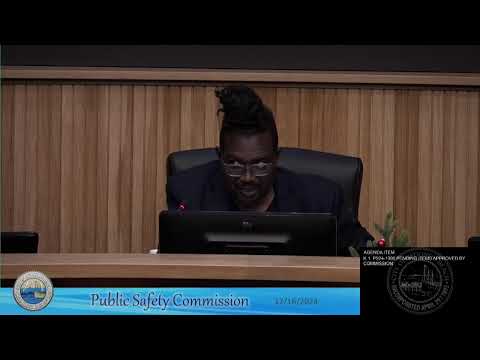
Division Chief Regan told the Redondo Beach Public Safety Commission on Dec. 16 the fire department has recorded roughly 7,200 emergency responses through Dec. 11, with about 74% classified as rescue and EMS incidents.
Regan said the department recently converted Engine 2 to a paramedic engine — adding narcotics and the ability for an engine paramedic to ride with a transporting ambulance — and noted that change reduced the department’s reliance on mutual aid by about 40% over the first two months after implementation. He reported year‑to‑date mutual‑aid totals of 104 times given and 235 times received.
“Approximately 7,200 responses in the city… 74% was rescue and EMS incidents,” Division Chief Regan said during the briefing. He added that early data show the paramedic engine has allowed the city to field more ALS capability without calling neighboring agencies for an additional rescue unit.
Personnel and station planning: Regan said four personnel recently completed probationary testing, two explorers completed paramedic internships, and two of the three newest firefighters completed their six‑month truck operator training. Commissioners and staff also discussed the potential role of a fire‑department community liaison but were reminded the bond measure approved by voters funds station construction and renovation, not additional ongoing staffing.
Bond measure: Commissioners had toured station facilities and discussed capital needs; Regan said the passage of the local bond measure was a cause for “extreme excitement” among staff and that project planning will proceed to design and construction phases. He emphasized that the bond measure finances facilities, not operational staffing increases.
Why it matters: The paramedic engine upgrade is an operational change intended to reduce mutual‑aid dependence and improve local EMS transport capability. New stations funded by the bond are intended to address aging facilities and long‑term operational capacity.
What’s next: Staff will continue to report operational data to the commission and to city decisionmakers as station designs and project timelines are developed.