Get Full Government Meeting Transcripts, Videos, & Alerts Forever!
Get email alerts on the Labor Contracts topic
No spam. Unsubscribe anytime.
Finance subcommittee rejects Professional Supervisors contract package after debate on vacation and flex-time
Summary
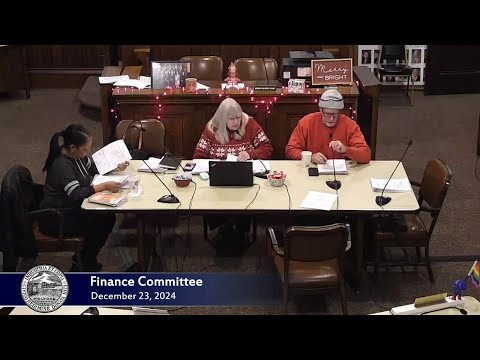
Holyoke City Council finance subcommittee voted 3–2 to deny the package of collective-bargaining items for the Professional Supervisors Association after several councilors objected to new vacation and flex-time language and other contract provisions.
The Holyoke City Council finance subcommittee voted down a package of three collective-bargaining items covering the Professional Supervisors Association (PSA), rejecting the agreement by a 3–2 roll-call vote on procedural appropriation. The subcommittee’s vote means the package will advance to the full council without a finance committee recommendation.
The subcommittee met Monday in a hybrid session. Councilor Michael Sullivan, Councilor Jordan (first name not specified in the transcript) and Councilor Ocasio voted against approving the items in committee; Councilor Devine and Councilor Givner voted in favor. The chair recorded the roll call: “Councilor Jourdain? No. Councilor Sullivan? No. Councilor Devine? Yes. Councilor Givner? Yes. Councilor Ocasio? No.”
Why it matters: The package included multiple substantive changes for the PSA bargaining unit — now affiliated with AFSCME — covering vacation accrual, a new flex-time provision, a revised performance-pay structure, and other modernizing changes. Opponents on the committee said portions of the contract would limit future management discretion and were unaffordable; supporters argued the changes standardize and clarify long-standing practices and add merit-based pay.
What was debated: Councilors pressing for a no vote singled out two provisions. Councilor Jordan said she would vote against the items “for 2 reasons. 1, I didn't support the add on of an extra week of vacation in the ordinance... Number 2, I'm against this flex time language. This hampers significantly management.” Those objections echoed concerns raised earlier in the discussion about whether the contract’s language limited appointing authorities’ flexibility and about the budgetary impact of added vacation and personal-time benefits.
City counsel and the negotiating team defended the agreement’s structure and legal standing. City labor attorney Russell (Russ) — who advised the committee during the session — explained that the group’s affiliation with AFSCME does not strip the city of charter powers and that many provisions reflect either state law updates or standard practice. “They have the right to do it,” Russ said, describing the group’s choice to affiliate with AFSCME. He also described the performance-pay design as a way to reward employees for evaluations and said the agreement’s retroactive wage increases would be handled via standard budget procedures.
Union and management details: Frank Gentile, an AFSCME representative, joined the meeting by phone and discussed the organization’s role; the union and city negotiators had produced a redlined contract and a companion settlement agreement. Subcommittee members and counsel discussed the contract line-by-line for more than an hour, covering topics including probationary periods, layoffs, discipline, job-posting procedures, and a new joint labor-management committee.
Next steps: Because the finance subcommittee did not approve the appropriation, the package moves to the full city council for consideration without a committee recommendation. The full council will decide whether to appropriate funds, which is the committee’s final checkpoint for contract funding.
Context and quotes: Supporters argued the changes modernize and codify long-standing practices; opponents objected that the contract would constrain future mayors and the council’s oversight. Councilor Jordan said the flex-time language was a “deal breaker” for her and would limit management authority. Russ told the committee that charter rights remain in place: “I would say that if there's anything like that, it's already in there. Nothing nothing has changed that we put in that would do that.”
Ending: The package’s outcome in committee leaves the final decision to the full council; budget implications and legal questions discussed in committee are likely to shape debate at that meeting.