Get Full Government Meeting Transcripts, Videos, & Alerts Forever!
Get email alerts on the Energy Transportation topic
No spam. Unsubscribe anytime.
Committee approves measure to expand electricity sales-tax exemption for fuel transport
Summary
House Bill 311 passed the Revenue Committee after members approved language expanding the sales-tax exemption for electricity used to move fuel from well sites through gathering lines and pipelines; the Department of Revenue noted ongoing litigation and said the bill would alter a prior interpretation.
The House Revenue Committee approved House Bill 311, an amendment to sales-tax treatment for electricity used to transport oil, natural gas and other hydrocarbons, extending the exemption to gathering and feeder lines that move product from well sites to intermediate collection or transmission points.
Representative Lean described the bill as targeted to “the feeder pipelines” that move hydrocarbons from well sites to larger interstate transmission points. The bill amends statutory language to define pipeline to include gathering systems and to make the exemption apply “regardless of the ownership of the transported, tangible, personal property.”
Brenda Henson, Director of the Department of Revenue, told the committee there is litigation about whether the existing exemption applies when a producer moves its own product rather than contracting with a pipeline-for-hire. She said historically the department and its rules treated the exemption as applying to pipeline and railroad companies that transport customer product, not to gathering systems or to producers moving their own product. Henson said the bill would change that administrative treatment prospectively and that the department is currently defending its interpretation in court.
Industry representative Andrew Obermueller (spelled in transcript as "Oldenmears" in one exchange) and other witnesses said the power needed to move product from wellhead to collection point is a significant operating cost for producers and that applying the exemption consistently would address inequities between producers that have associated gas and those that must pay for electricity to operate gathering and compression equipment.
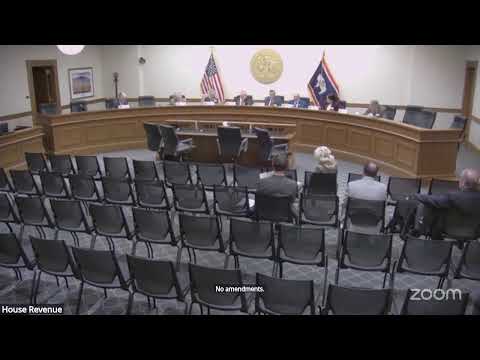
After public comment the committee took up the bill. Representative Brown moved the bill and Representative Campbell seconded. On roll call the measure passed 6-2 with one excused: yes votes from Brown, Campbell, Lean, Lucas, Steivar and Chairman Locke; no votes from Storer and Wharf; Representative Riggins excused. The clerk reported “6 aye, 2 no, and 1 excused.”
The Department of Revenue said it would administer any change according to statute and that the bill’s effective date (July 1) would govern prospective claims. The department cautioned that retroactive refund exposure and ongoing litigation add complexity but that legislative direction would clarify policy going forward.