Get Full Government Meeting Transcripts, Videos, & Alerts Forever!
Get email alerts on the Tax Credits topic
No spam. Unsubscribe anytime.
Revenue Committee debates child tax credit; bill fails amid administrative cost concerns
Summary
House Bill 104, proposing a refundable child tax credit paid as a sales-tax refund, failed in committee after discussion about cost, administration and whether the program should be means-tested; the Department of Revenue warned of significant setup and processing costs.
House Bill 104, a proposed refundable child tax credit that would provide up to $200 per child (with a $400 presumed cap unless applicants document higher taxes paid), did not advance from the House Revenue Committee after a 3-4 vote with two excused.
Representative Yen, sponsor of the bill, said the measure was designed to provide state support to families and was structured as a sales-tax credit because Wyoming does not have a personal income tax. "It is up to $200 per child for 2 children," the sponsor said while explaining the bill’s structure and the $400 automatic presumption the bill uses for households that cannot produce receipts.
Committee discussion probed several design issues: eligibility for more than two children, whether the program would require means testing, whether the credit could create a pretext for a later state income tax, and how divorced or split custody households would claim the benefit. Representative Lucas asked how the credit would be delivered in a state without an income tax; Yen said applicants would apply to the Department of Revenue and the department would issue refunds in a manner and form it prescribes.
Brenda Henson, Director of the Wyoming Department of Revenue, testified the department could administer a refund program similar to the existing Property Tax Refund program but warned of significant administrative costs. Henson said the department’s estimate (included in the bill’s fiscal note) would require roughly 45 temporary positions and a one-time information-technology cost for an application portal; the department estimated about $1.6 million in first-year administrative costs and about $1.2 million in subsequent years if the program were funded. The bill proposed a $5 million appropriation; Henson said $5 million would fully fund about 25,000 $200 refunds and that the bill includes a prorating mechanism if appropriations prove insufficient.
Public testimony included support from the Wyoming Women’s Foundation, which noted that about 15% of children in Wyoming are food insecure and said targeting families could be beneficial. Opponents and some committee members said the measure should be considered as part of broader tax restructuring and expressed concern about program cost and implementation timing.
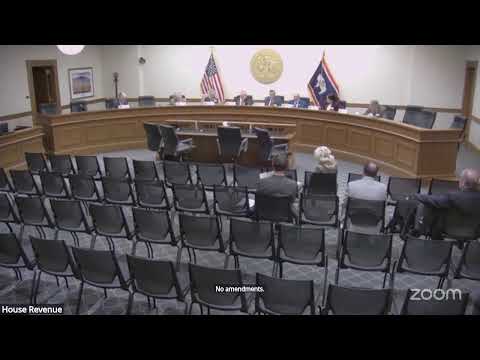
Representative Storer moved the bill and Representative Wharf seconded. The committee called the question without amendments; roll call returned 3 aye, 4 no and 2 excused (Riggins and Chairman Locke excused). The bill did not pass out of committee.
The Department of Revenue said it could implement the program if funded, but warned the department would treat deadlines strictly and that missing the March 1 application deadline would prevent late applicants from receiving refunds. The department also noted that applicants who can document higher tax payments than the $400 presumptive cap could be eligible for larger refunds if appropriation allowed.