Get Full Government Meeting Transcripts, Videos, & Alerts Forever!
Get email alerts on the Taxation Excise topic
No spam. Unsubscribe anytime.
Committee rejects repeal of malt beverage excise tax; supporters cite small-business relief, opponents cite local revenue
Summary
House Bill 124, which would repeal Wyoming's malt beverage excise tax, failed in the Revenue Committee. Testimony focused on the modest size of the tax, administrative burden on microbreweries, and the revenue the tax generates for the general fund.
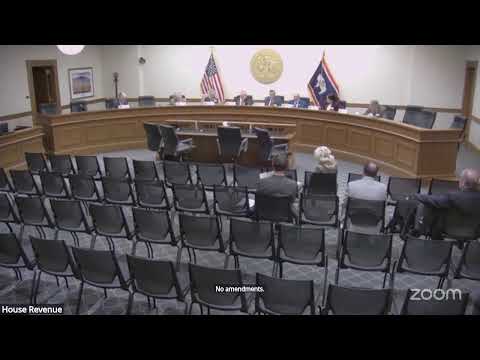
The House Revenue Committee voted 2-6 to reject House Bill 124, which would repeal the state's excise tax on malt beverages.
Representative Feiler, sponsor of the bill, said the excise tax imposes administrative burdens on microbreweries and other small producers that must send periodic reports and checks for small amounts. “A lot of the administrative costs that gets burned on to the microbreweries… are just a very big burdensome on small business,” he told the committee.
Tom Montoya of the Wyoming Department of Revenue’s Liquor Division provided the committee with fiscal figures showing actual malt beverage excise collections for fiscal year 2024 totaled $247,768, a relatively small amount in the state budget. Montoya said the beverage excise tax rate in Wyoming is 2 cents per gallon; he said the national median is about 20 cents per gallon.
Mike Mosier of the Wyoming State Liquor Association and other industry witnesses urged the committee to consider the policy and the administrative burden on small brewers and retailers; Mosier noted the tax’s modest yield but framed repeal as a policy decision about whether the state should continue to collect the tax.
Opponents and lawmakers expressed concern about setting precedent by eliminating a targeted tax rather than addressing broad tax structure. Representative Orr and Representative Lane said they preferred a comprehensive review of tax policy rather than piecemeal reductions. Some committee members called the tax a choice-based levy and said broader reform would better serve taxpayers.
Supporters included Tyler Lindholm of Americans for Prosperity, who argued small businesses shoulder the reporting burden because beer excise taxes are collected by the vendor rather than centrally. Industry witnesses and supporters said repeal would help small brewers even if the direct revenue change was modest.
After public comment the committee took up the measure. Representative Lucas moved the bill and Representative Campbell seconded. On roll call the committee returned 2 aye (Campbell, Lucas), 6 no (Brown, Lean, Storer, Stivaler, Steivar, Wharf) and 1 excused (Riggins), per the clerk. The bill failed to pass out of committee.
The Department of Revenue noted the state’s excise structure and control-state distribution system produce additional revenue beyond the excise tax. Witnesses and the department also discussed the complexity of collection for microbreweries and smaller producers, and whether targeted relief should be broader tax reform.