Get Full Government Meeting Transcripts, Videos, & Alerts Forever!
Get email alerts on the Taxation Sales topic
No spam. Unsubscribe anytime.
Revenue Committee advances bill to exempt insurance damage settlements from sales tax
Summary
The House Revenue Committee voted to pass House Bill 113, which would prevent sales and use tax from applying to insurance damage settlement payments used toward replacement motor vehicles; supporters and state tax staff described documentation and timing rules the Department of Revenue and county treasurers would use to administer the exemption.
The House Revenue Committee voted 5-3 to pass House Bill 113, an act “relating to taxation and revenue, exempting insurance damage settlement payments from sales and use taxation and providing for an effective date,” Representative Smith told the committee as he presented the measure.
The bill would prevent motorists who receive an insurance damage settlement after a totaled vehicle from being taxed on that insurance payment when they purchase a replacement vehicle. Representative Smith said the change would stop what he described as “double tax” when an insured motorist replaces a totaled car.
The measure drew supporters and critics during public comment. Former Representative Alan Slagle said the bill grew out of a constituent case in which a senior on a fixed income paid about $1,500 in sales tax after a totaled vehicle, which he said was a significant burden. “Most of the time when we have an accident, it's not our choice to have that accident,” Slagle told the committee, arguing the tax on the insurance payout taxed money that had been taxed previously.
Brett Fanning, excise tax administrator at the Wyoming Department of Revenue, told committee members the department and county treasurers had worked on language to make the exemption administrable. Fanning said the bill establishes a two-part documentation test: proof that the insurance company acquired or took possession of the damaged vehicle and proof that the insurance payment was used within 90 days to acquire a new motor vehicle. He said county treasurers and the department are familiar with similar documentation used for trade-ins.
Lindsay West, representing the Wyoming County Treasurers Association, asked the committee to consider practical implementation questions, including which document would establish the date the insured received the settlement (a check date or a deposit date) and how to ensure the settlement was for damage rather than salvage or a manufacturer buyback. West said vendors and private-party sellers may not have paperwork indicating an insurance settlement was used, and she warned the administrative burden would fall to county treasurer offices and, in some cases, dealers.
Johnson County Commissioner Bill Lavonte, speaking for the Wyoming County Commissioners Association, opposed the bill on fiscal grounds, arguing further sales-tax exemptions reduce local government revenue that pays for services such as law enforcement and roads.
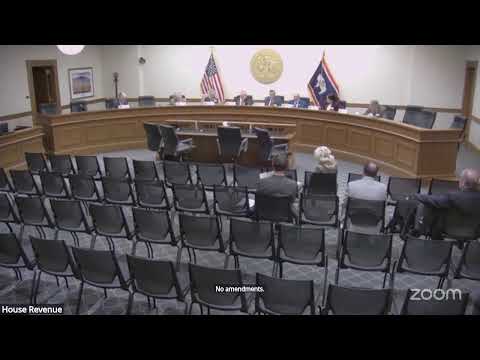
After discussion and without amendments, Vice Chair Stivaler moved the bill and Representative Brown seconded. The committee adopted the bill on a roll call: Brown, Campbell, Lucas, Stivaler and Chairman Locke voting aye; Lean, Storer and Wharf voting no; Representative Riggins excused. The clerk reported “5 aye, 3 no, and 1 excused.”
Under the bill as presented, the Department of Revenue would implement rules and county treasurers would use submitted settlement documentation and the 90-day timing rule to determine exemption eligibility.
Supporters said the bill targets a narrow set of cases where an insurance settlement is effectively used as a trade-in; opponents raised concerns about lost local revenue and administrative complexity for treasurer offices. The committee record shows the bill will move forward from committee as passed.