Get Full Government Meeting Transcripts, Videos, & Alerts Forever!
Get email alerts on the Capital Budget Cip topic
No spam. Unsubscribe anytime.
Planning Board subcommittee accepts FY26-FY31 CIP budget, asks transmittal letter to highlight deferred maintenance
Summary
The Planning Board’s Capital Improvement Budget & Program subcommittee accepted the proposed FY26 budget and FY26–31 capital program and requested language in the transmittal letter calling attention to a backlog of deferred maintenance on roads, buildings and other county facilities.
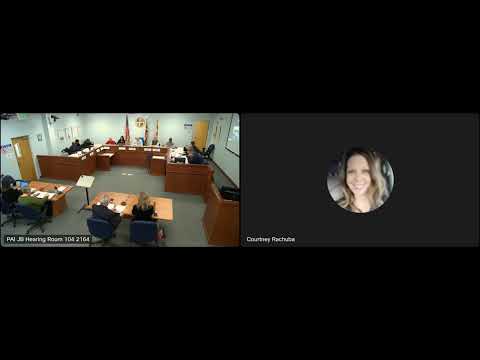
The Baltimore County Planning Board subcommittee on the Capital Improvement Budget and Program on Feb. 20 voted to accept the staff-recommended Stage 1 proposed fiscal year 2026 capital budget and the FY26–31 capital program, and asked that the transmittal letter to the County Executive and County Council call attention to deferred maintenance needs across county agencies.
Subcommittee chair Emily Brophy opened the Feb. 20 work session by asking staff from the Department of Planning to present agency responses to citizen input meeting requests. Planning staff reviewed Agency-proposed capital budgets, explained that the director of the budget office sets agency target limits, and said staff had found no net change in funding amounts or sources from the adopted fiscal year 2025 budget.
Planning staff described numerous community requests submitted during the citizen input meeting process and summarized agency follow-ups. Presenters addressed storm drain and sidewalk requests from neighborhoods (including Gwyn Oak and Oella), school-capacity and facility requests in Lutherville, and park and trails requests in Reisterstown and Owings Mills. Staff also summarized requests related to the Pikesville area and noted which items were ineligible under current connectivity or program guidelines and which would require coordination with the State Highway Administration.
During the presentation, planning staff relayed comments from agency presenters including the Department of Public Works and Transportation, Recreation and Parks, and Environmental Protection. Board members pressed staff and agency representatives on where projects were already funded in previous CIPs versus projects seeking new funding in FY26. Director Lafferty clarified that the subcommittee’s transmittal letter would be drafted after the subcommittee action and provided to the full board for review.
Board discussion turned to county-wide deferred maintenance. Chair Scott Halupka said the subcommittee should underscore a “significant backlog in capital projects, such as road repairs and maintenance or replacement of county buildings, including schools, libraries, and community college campuses,” and proposed language to that effect for inclusion in the transmittal letter. The subcommittee voted to accept the staff recommendation and to request that the transmittal letter include the suggested language about deferred maintenance; the motion passed with all members present voting in favor.
The subcommittee’s action transmits the accepted Stage 1 budget and program to the full Planning Board; the final vote on the Capital Improvement Program is scheduled for the Planning Board’s next regular meeting on March 6, 2025.
Key points from the discussion
- Planning staff recommended acceptance of the Stage 1 FY26 budget and FY26–31 program as submitted by agencies and budget office targets. - Board members requested that the transmittal letter call attention to deferred maintenance needs and funding shortfalls. - During presentations staff noted DPWT testimony that road repair needs were large compared with available funding.
Context and next steps
The subcommittee’s acceptance is a Planning Board step that forwards the Stage 1 budget to the full board; any changes or additional recommendations may be made before the Planning Board’s March 6 final vote and before transmission to the County Executive and County Council.