Get Full Government Meeting Transcripts, Videos, & Alerts Forever!
Get email alerts on the Stormwater Npdes topic
No spam. Unsubscribe anytime.
County officials say proposed stormwater permit could cost Upland hundreds of millions; negotiations ongoing
Summary
San Bernardino County staff and consultants told the Upland City Council the tentative 5th-term NPDES/MS4 permit could require large new capital and operating spending in Upland — Beacon Economics estimated about $424 million over 20 years — and that cities are negotiating changes with the Regional Water Quality Control Board.
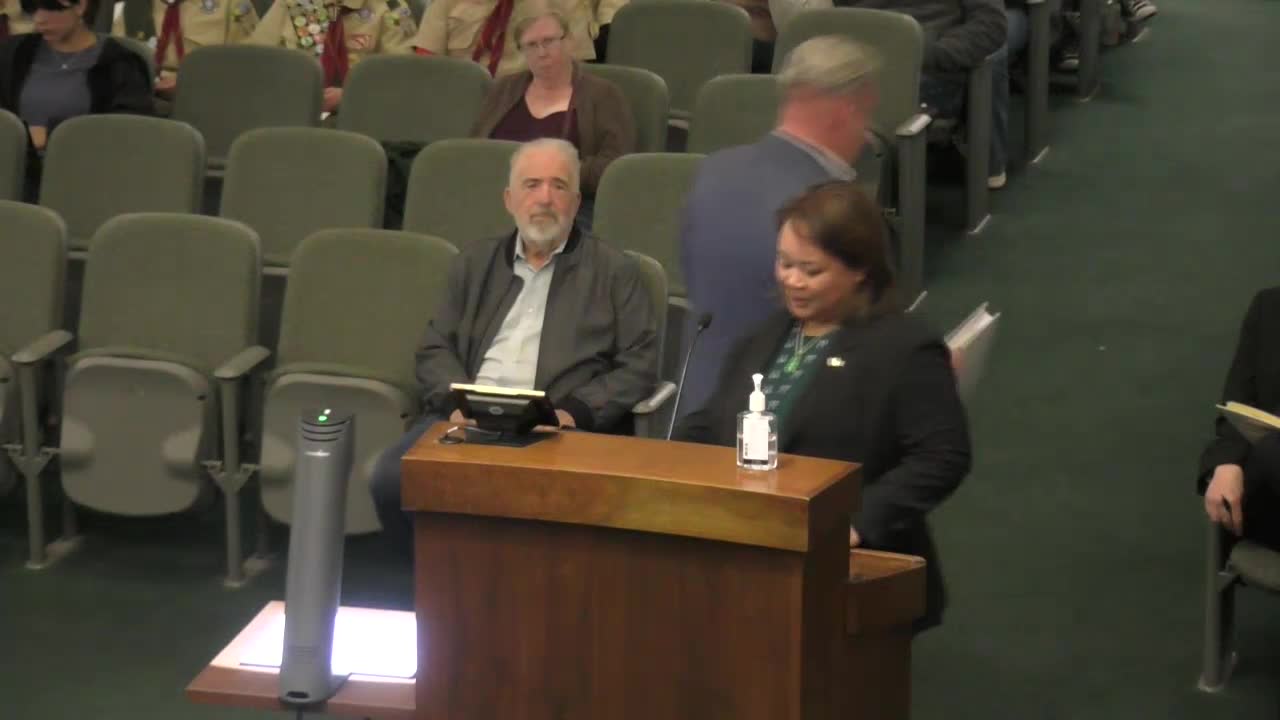
Arlene Chun, engineering manager in the San Bernardino County Department of Public Works’ environmental division, updated the Upland City Council on negotiations over the draft 5th-term National Pollutant Discharge Elimination System (NPDES) Municipal Separate Storm Sewer System (MS4) permit on Jan. 27. The tentative regional order, released in March 2024 and amended through public process, would expand coverage and add new, numerically based compliance requirements across three counties and dozens of cities.
Chun told the council the Tri-County group (San Bernardino, Riverside and Orange counties and affected cities) submitted an extensive joint comment package on July 3, 2024 — “roughly almost a 1,000 pages” including attachments — and is still negotiating with the Santa Ana Regional Water Quality Control Board. The county commissioned Beacon Economics to estimate compliance costs. Chun said Beacon’s analysis shows an estimated combined capital and operations-and-maintenance cost for Upland of about $424,000,000 over 20 years under the permit as written today.
The county and consultants described how the MS4 permit differs from traditional point-source permits: stormwater collected in street drains flows directly to local water bodies (in Upland’s case, the San Antonio Channel and ultimately the Santa Ana River) rather than to wastewater treatment plants. Chun and county staff said the tentative order includes new watershed management plan requirements, increased inspection frequencies, trash-capture device mandates and broader development standards, all of which drive the estimated costs.
Chun and county representatives said current city spending on stormwater is small by comparison — the city has about $500,000 built into existing programs and relies on contracted street sweeping for part of the work — and gave examples of potential project-level costs (Chun cited a Euclid Avenue capital projection of roughly $36 million). County staff also said Beacon produced high-level parcel estimates in the range of $1,000 to $3,500 per parcel per year over 20 years under the permit’s current formulation, though the county emphasized those are model outputs tied to the tentative order and subject to change.
Chun described the negotiation timeline: Regional Board staff received testimony and the Beacon presentation at a Sept. 13, 2024 workshop, subsequently granted additional time to work with permittees, and is expected to produce a response to comments and a revised tentative order. County staff asked cities to support coordinated public workshops before the Regional Board and said legal teams are still meeting to work on the legal and numeric-compliance issues. Chun said the regional board’s revised tentative order will open another public comment period.
Council members asked practical questions about where stormwater currently flows (Chun said Upland’s storm drains discharge to the Santa Ana River watershed), how costs were apportioned across jurisdictions, whether costs could be placed on ratepayers, and what happens if a voter measure fails. County staff said establishing a stormwater rate would likely require a vote (Prop 218 process) and that if measures failed the city would have to absorb costs in general fund or find other sources.
Chun and county staff urged Upland to coordinate with the county and other permittees. They described ongoing technical and legal meetings, engagement with environmental organizations (OC Coastkeeper and Inland Waterkeeper requested meetings), and efforts to secure legislative and elected-official support; Chun said the county submitted several legislative support letters with the July packet.
The council heard repeated cautions about the scale and uncertainty of potential costs, the differences in impact across Orange, Riverside and San Bernardino counties, and the need for further analysis specific to Upland. County staff said they will return with more city-specific impact breakdowns and asked the council to consider adopting or joining coordinated regional responses to the permit as the process continues.
Chun’s presentation and the subsequent discussion did not include a formal council vote; the item was presented as an informational update and a request for continued coordination and engagement with county-led efforts and Regional Board processes.
Ending: County staff said they will return with a Upland-specific impact presentation once the Regional Board releases a response-to-comments and a revised tentative order. The council asked staff to keep the public informed and indicated interest in participating in future regional workshops and legal coordination.