Get Full Government Meeting Transcripts, Videos, & Alerts Forever!
Get email alerts on the Behavioral Health Detox topic
No spam. Unsubscribe anytime.
Yamhill County explores using opioid settlement funds for a detox facility in McMinnville
Summary
County staff outlined shortages of medically managed detox beds, discussed funding options including opioid settlement dollars, and agreed to begin feasibility work and partner outreach after public concern about siting in downtown McMinnville.
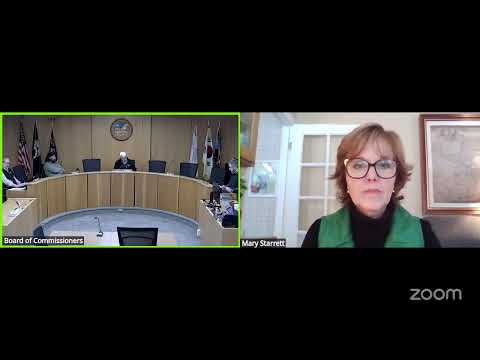
Yamhill County commissioners on Feb. 13 discussed using opioid settlement funds to develop a medically managed withdrawal (detox) facility in McMinnville and directed staff to begin feasibility work and partner outreach.
County Health and Human Services Director Lindsey Manfred told the Board that the region lacks medically managed detox and residential treatment beds and that the county’s opioid settlement dollars could be used to fund a facility. “A sobering center is a place for someone to go who is incapacitated because of drugs or alcohol … They don't need any medical treatment,” Manfred said, distinguishing that model from a medically staffed withdrawal management center that requires 24/7 nursing and physician oversight.
The discussion matters because local officials and service providers say people who need medically managed detox — for example, treatment for opioid or alcohol withdrawal — are currently traveling outside Yamhill County to access care. Manfred and other staffers outlined steps they say are needed before the board can seek grant or legislative funds: identify potential locations, get renovation or acquisition cost estimates, confirm a provider that accepts Medicaid and offers opioid-specific withdrawal management, and develop an operational funding plan.
Manfred said the county has convened regional partners, including community mental health directors, Coordinated Care Organizations (Yamhill CCO and PacificSource) and the governor’s convened regional group, and that she plans further meetings in March to better understand regional capacity. She also said the local Alcohol and Drug Planning Committee has prioritized the issue and that the next step is to become more “shovel ready” with a site and cost estimate.
Ken (county staff) told the board the county has roughly $1.4 million in opioid settlement funds currently unspent and that annual inflows are smaller — “a little closer to about $300,000 a year,” he said — underscoring that any capital project could use most or all of that balance and that long-term operational funding would need separate revenue sources.
Public comment reflected local business concern about siting. Chad (Chaz) Gibbons, leader of the McMinnville Task Force, said in a submitted letter and public comment that locating a detox facility in McMinnville’s downtown urban renewal zone “will cause lasting harm to our local businesses and tourism” and asked that any downtown placement be at least 1 mile outside the urban renewal zone and that the county hold a public hearing if it proceeds.
Commissioners and staff discussed the county-owned annex building in McMinnville as one possibility; staff noted pros (ownership) and cons (renovation costs, proximity to services). Several commissioners urged beginning a formal feasibility study to answer basic questions — number of beds, clinical staffing needs, plumbing and renovation scope, and estimated per-bed capital cost — and to consult firms and other regional providers before committing funding.
Operational models discussed included insurance billing (private insurance and Medicaid) as the primary revenue stream and short-term grant support to cover three to six months of startup costs, per staff accounts. Commissioners emphasized that any partner or operator should accept Medicaid and provide opioid-specific withdrawal management rather than alcohol-only detox.
Willamette Valley Medical Center was identified as a potential partner to explore expansion of existing capacity; staff offered to contact the hospital to determine whether it would accept Medicaid and expand beyond alcohol-only detox.
Board members generally supported staff follow-up. Chair Johnson and others asked staff (Manfred and Ken) to gather feasibility information, consult the Stedman Group and other providers, and prepare a scope of work for possible architecture/engineering services. Commissioners said they would return the topic for further public discussion before any formal funding commitment.
Why this matters: medically managed detox programs require significant capital and medical staffing and are treated differently in funding and licensing than lower-acuity sobering centers; decisions about siting also intersect with downtown economic development and existing concentrations of social services in McMinnville.
Ending note: Staff said they will continue outreach with the city of McMinnville, prospective providers, the CCOs and regional partners, and return with feasibility information and a proposed scope of work for the board to consider.