Get Full Government Meeting Transcripts, Videos, & Alerts Forever!
Get email alerts on the Beach Renourishment topic
No spam. Unsubscribe anytime.
Flagler Beach commissioners move to honor earlier beach‑renourishment pledge, propose property‑value assessment instead of flat fee
Summary
Commissioners agreed to formalize the city’s prior commitment to beach renourishment funding and asked staff to pursue an MSTU (property‑value based assessment) rather than the county’s proposed flat MSBU fee; steps include drafting a letter to the county or a city resolution and aligning municipal and county ordinances.
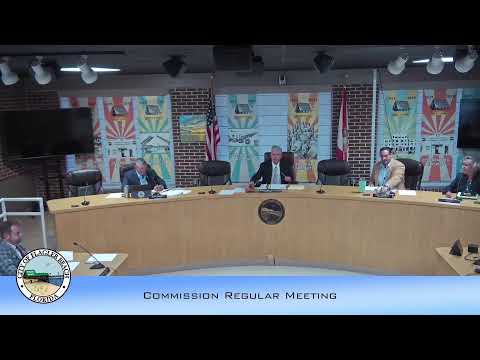
Flagler Beach City Commissioners agreed during their meeting to reaffirm the city’s prior commitment to contribute to county-led beach renourishment and directed staff to pursue a municipal-styled, property-value assessment (an MSTU) rather than accepting the county’s flat-rate MSBU proposal.
Commissioner Cooley, referencing earlier agreements, urged the commission to “honor our commitment” and proposed using an MSTU so the assessment would be proportional to taxable value rather than a flat $160-per-parcel charge. He said the MSTU approach would spread the cost more equitably and avoid a one-size-fits-all flat fee.
The move is intended to remove Flagler Beach from ongoing political back-and-forth at the county level by establishing a clear municipal position. City Attorney guidance noted the formal municipal-consent process requires the county to first publish its proposed ordinance; the city can then consent by ordinance or pursue an alternative route by applying to create an MSTU itself through a city-drafted resolution and boundaries.
Commissioners and staff discussed the numbers and timing but did not adopt an ordinance at the meeting. Commissioners referenced an example calculation discussed in the meeting in which generating roughly $715,000 on an anticipated $1.3 billion taxable value would require about a half-mill; staff said such estimates could be refined for next year’s budget. Commissioners also discussed a previously circulated consultant analysis — retained by the county — that concluded nourishments would likely be needed every six years, a shorter interval than an earlier 11-year estimate.
City Attorney cautioned that the county’s ordinance language will be decisive: municipal consent covers not only participation but the purpose for which revenues may be used, and the city must ensure its own ordinance language aligns with the county’s to avoid future legal disputes.
No formal vote or ordinance was adopted at the meeting; commissioners asked staff to continue negotiations, consider drafting a municipal resolution as an option, and return with calculations and draft language for how the city would implement an MSTU if that is the chosen route.