Get Full Government Meeting Transcripts, Videos, & Alerts Forever!
Get email alerts on the Public Safety topic
No spam. Unsubscribe anytime.
Judiciary committee debates felony hit-and-run language after victims and police urge tougher penalties
Summary
House Bill 111, which would add a knowledge requirement and increase penalties for failing to stop after an accident that causes serious bodily injury or death, prompted strong testimony from victims and law enforcement but divided the Senate Judiciary Committee.
House Bill 111, which would add a knowledge requirement and increase penalties for failing to stop after an accident that causes serious bodily injury or death, prompted strong testimony from victims and law enforcement but divided committee members over the bill’s drafting and scope. After extended discussion and proposed revisions, the Senate Judiciary Committee recorded a do-pass/fail recommendation (1 aye, 4 no) on the current draft.
Representative Smith presented the bill as a targeted change to motor-vehicle law to make it easier for prosecutors and law enforcement to pursue more serious charges in hit-and-run cases involving grave injuries. “We are increasing penalties for failing to stop where an accident involves serious bodily injury or death and adding a knowledge requirement,” Representative Smith said, citing a string of hit-and-run incidents in her district including three cases in Torrington since 2021.
Torrington Police Chief Matt Johnson and a Wyoming Highway Patrol trooper described incidents where pedestrians were struck, slid off vehicle hoods and were left at the scene. “We think that if you're knowingly involved in an accident that later results or later becomes death or serious bodily injury, that should be a felony,” Chief Johnson said. He argued current law can leave perpetrators eligible for misdemeanor charges when they are sober and did not have preexisting intent, even if their conduct displayed “extreme indifference to human life.”
Andrea Griffin, a Torrington resident and victim, recounted being struck in a crosswalk in October 2022. She described multiple skull and facial fractures, a broken hip and months of rehabilitation, and said the driver denied knowing he hit her. “I strongly encourage this committee to pass this bill,” she told members. “All you've got to do is stop.”
Law-enforcement groups and the Wyoming Association of Sheriffs and Chiefs of Police urged stronger penalties and said the bill would help deter leaving scenes of crashes that produce serious injuries. Trooper Casey Ramsey of the Wyoming Highway Patrol told the committee patrol data show hundreds of hit-and-run crashes statewide across the years cited; he said patrol does not object to the bill’s intent and believes it could deter leaving the scene.
Committee concerns centered on the bill’s current wording. Several senators raised constitutional and evidentiary questions about the placement and effect of the word “knowingly” in the draft; some warned that the phrasing could create an unintended affirmative defense for defendants who did not know their actions caused injury. Senator Hicks and others proposed structural changes — keeping the existing misdemeanor language but adding a separate subsection to create the felony offense — to avoid casting too broad a net. Senator Olson and other members expressed reservations about creating a new five-year felony with a $50,000 fine that might not produce the intended deterrent effect.
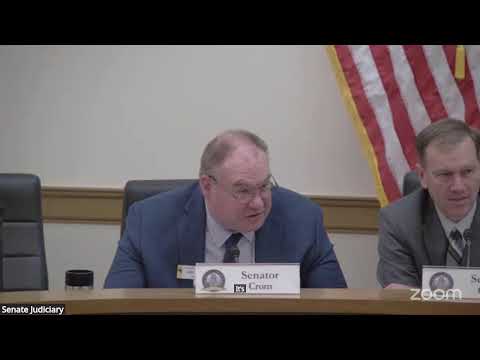
After debate the sponsor said she was amenable to working “in the committee of the whole” on an amendment to refine the bill’s structure and language. The committee later recorded a do-pass/fail vote; roll-call votes were: Senator Crago — No; Senator Crum — No; Senator Hicks — Aye; Senator Cole — No; Chairman Olsen — No. The clerk announced “1 aye, 4 no's. Do pass fail.”
What the bill would change
- Adds a mental-state element (“knowingly”) tied to involvement in an accident that results in bodily injury or death. - Creates higher penalties for failures to stop after accidents that result in serious bodily injury or death; testimony referenced proposed monetary and imprisonment ranges used to sit between misdemeanor penalties and vehicular homicide penalties.
Next steps
Sponsor Representative Smith said she would be willing to work with committee members on an amendment in a committee-of-the-whole format. Several senators said they would prefer a clarified draft before sending a positive recommendation to the floor. The do-pass/fail recommendation leaves the bill available for further amendment and consideration by the full Senate but reflects committee members’ concerns about drafting and prosecutorial practicality.