Get Full Government Meeting Transcripts, Videos, & Alerts Forever!
Get email alerts on the School Budget topic
No spam. Unsubscribe anytime.
Walpole schools face $1.6 million special-education deficit; FY26 gap could force cuts
Summary
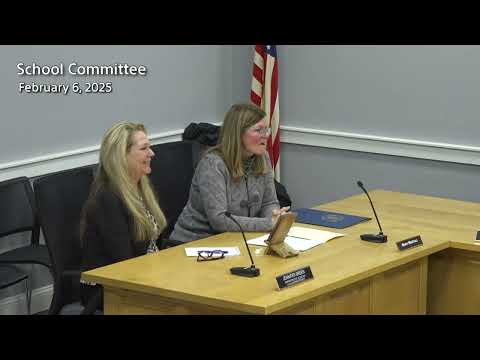
Walpole Public Schools officials told the school committee that an estimated $1.6 million special-education deficit in FY25, rising health-insurance costs and a $1.3 million gap with the town administrator’s FY26 figure could force about 10 staff reductions unless state relief or other funding is secured.
Walpole Public Schools officials reported a roughly $1.6 million special-education (SpEd) deficit for fiscal 2025 and said the district is working to close a $1.3 million gap between the school committee's FY26 budget and the town administrator’s proposal.
The superintendent’s office and business staff told the school committee on Feb. 6 that the FY25 deficit reflects rising tuition and transportation costs and that circuit-breaker carryover reserves built up in prior years have been exhausted. The district said it qualifies for state extraordinary relief due to a more-than-25% increase in SpEd spending over two consecutive years; any award will be announced in April and paid in May, officials said.
The deficit is “approximately $1,600,000,” the business office reported, a sum that comes on top of earlier SpEd increases. District staff said state decisions to raise private-school tuitions in recent years, combined with the commonwealth’s lower-than-target reimbursement rates for transportation, have amplified the district’s exposure.
Superintendent (name not specified in transcript) said the district is monitoring expenses closely and has been communicating changes in placements and costs to the business office as they occur. The committee was told that the SpEd carryover that had been used as a reserve for unexpected costs has been largely depleted.
Officials said three-year SpEd growth is substantial: FY24 increased by about $533,000 (21%), FY25 rose roughly $1,323,000 (42%), and FY26 is projected to rise $865,000 (19%), with a three-year total increase of about $2,721,000. The business office emphasized that many SpEd expenditures are mandated and therefore difficult to reduce quickly.
Personnel and health insurance are the largest budget drivers. The district said personnel costs account for about 85% of the operating budget. Town officials have informed the school committee of an estimated $300,000 higher health-insurance cost than anticipated in the town administrator’s projection; a final figure was expected within one to two weeks after the meeting.
To bridge a $1.3 million funding gap for FY26, district staff said options include one-time relief, recurring revenue, negotiating lower-than-projected contract settlements, or position reductions. Administrators presented a scenario in which eliminating about 10 positions would save roughly $650,000, roughly half the current gap, if no other funding is secured.
Committee members said they would increase advocacy with town leaders and state legislators. School committee members and administrators discussed preparing materials for a forthcoming legislative breakfast and coordinating with regional superintendents and advocacy groups to press for district-level funding priorities and for prioritization of K–12 in state revenue allocations.
The committee did not vote on a new budget at the meeting; members directed staff to continue negotiations and outreach. Warnings from members emphasized the uncertainty inherent in relying on potential state relief and the timing of that relief in the current fiscal year.
Votes at a glance: The committee approved administrative warrants, accepted gifts and approved minutes by unanimous votes during the meeting; it also voted to enter executive session for union and nonunion negotiation strategy.
What happens next: State notification about extraordinary SpEd relief is expected in April with funds distributed in May; in the meantime, the district will continue budget development, collective-bargaining negotiations and targeted advocacy with town and state officials.