Get Full Government Meeting Transcripts, Videos, & Alerts Forever!
Get email alerts on the Budget And Finance topic
No spam. Unsubscribe anytime.
SFMTA faces $50M shortfall; board weighs non‑transit cuts as public urges saving crossing‑guard program
Summary
The San Francisco Municipal Transportation Agency on Feb. 18 told its board it faces roughly $50 million in funding shortfalls for fiscal 2025–26 and presented choices that could spare downtown Muni service but would cut or delay neighborhood programs such as school crossing guards and bus‑stop lighting.
The San Francisco Municipal Transportation Agency on Feb. 18 told its board of directors it faces a roughly $50 million shortfall for fiscal 2025–26 and options to close the gap that would affect Muni service, neighborhood safety programs and vehicle‑related subsidies.
Chief Financial Officer Breema Hoarder told the board that a combination of lower-than-expected operating grants, reduced parking revenues and some higher-than-forecast closing costs left the agency with a $50 million funding gap in 2025–26. Staff presented three broad ways to close the shortfall: (1) summer Muni service reductions (three scenarios presented at the Feb. 4 meeting), (2) a package of agency program and project reductions that would shift some capital money and cut or delay specific initiatives, and (3) a one‑time draw of $15 million from SFMTA’s reserves. Staff said a mix of the second and third options would minimize immediate rider impacts while still reducing operating costs.
Hoarder said SFMTA already is trimming spending this fiscal year and expects to end FY24–25 near balance after hiring freezes and other controls, but that the agency has less capacity to absorb further declines. “This is largely a revenue problem,” she said, noting operating grants and parking receipts have not recovered to previous expectations.
The list of program/project options in staff materials included deferring a historic‑vehicle overhaul, delaying a phase‑two bus midlife overhaul, reducing maintenance at shared BART–Muni stations, cancelling a bus‑stop lighting program intended to improve safety in equity priority neighborhoods, reducing tow‑subsidy items (including eliminating the “first tow free” policy and limiting repeat low‑income waivers), and eliminating or finding an alternate funding source for the school crossing‑guard program. Staff estimated those non‑transit options would cover roughly $35 million of the need; the remaining $15 million would require either service cuts or use of reserves.
Board members and staff repeatedly emphasized the tradeoffs. Director [Janet] Tarlo said the agency should avoid harming transit service if possible because Muni’s recovery is central to the region’s economy. Director Hemminger said the reserves exist for rainy days and supported drawing some amount to protect service while the city and regional partners work on longer‑term revenue. Other directors said they would prefer a mix of modest nontransit reductions plus a smaller reserve draw rather than immediate large service cuts.
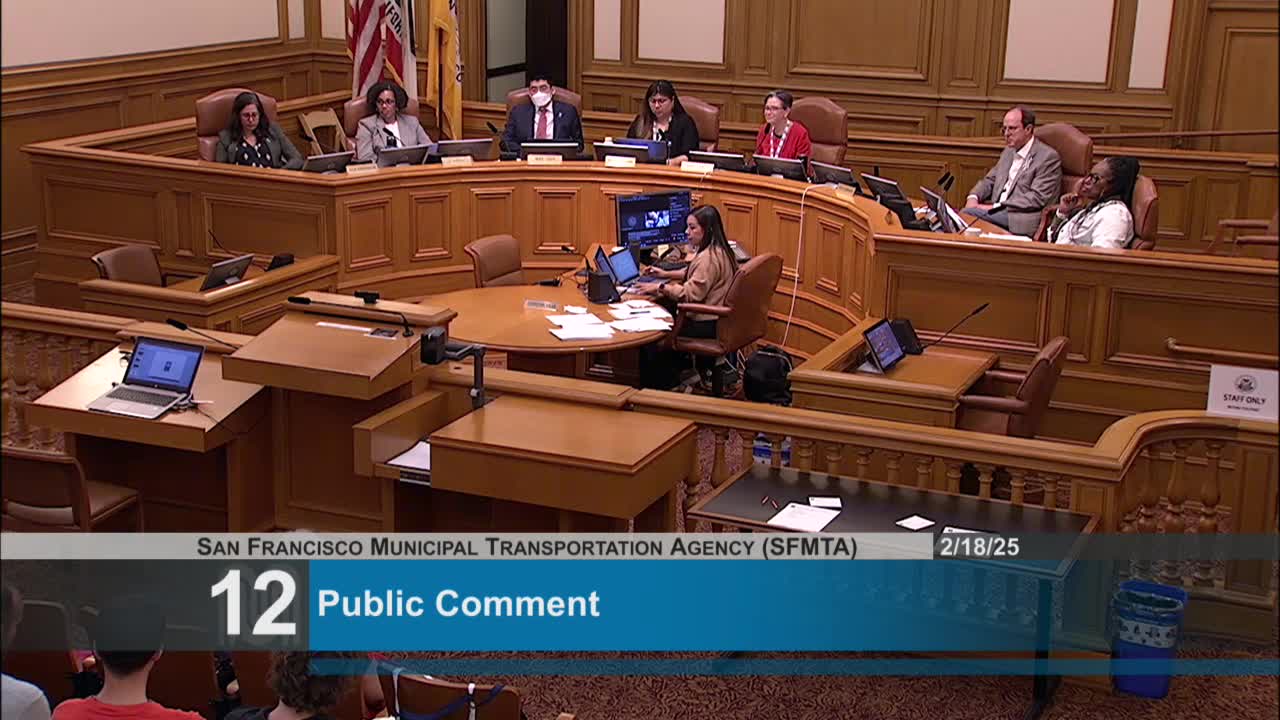
Public comment at the start of the item was dominated by parents, school officials and crossing guards who urged the board not to eliminate the school crossing‑guard program. SEIU Local 1021, crossing‑guard union representatives and dozens of speakers described crossing guards as essential to child safety and Vision Zero goals; speakers said the proposed savings from eliminating the program — roughly $2.9 million — were small compared with the potential human and legal costs if a child were injured. Multiple public commenters urged the board instead to consider other revenue sources, including expanded parking meter hours, a general‑fund transfer or drawing reserves.
Union leaders representing transit operators also addressed the board, asking staff to resolve outstanding scheduling and vacation sign‑up issues and warning that operator morale and retention are already strained. Several operators described long shifts over the NBA All‑Star weekend and said understaffing and earned time off remain urgent personnel issues.
Next steps: staff asked the board for direction and said detailed packages would return to the board on March 4 (final decision on which options to use to close the $50 million gap) and March 18 (more detail on parking optimization items). If the board approves service cuts, staff said they would return with a Title VI equity analysis and a final implementation package in April to allow scheduling and operator training ahead of a July start date.
Why it matters: SFMTA projects a much larger, structural shortfall (staff cited a $322 million “cliff” in FY26–27 when federal/state relief expires). The choices the board makes now — whether to protect service by spending reserves and cutting capital or to begin making sustained service reductions — will shape rider access across the city and influence voter and stakeholder support for future funding measures.
A number of options remain on the table; the board did not take a final vote at the Feb. 18 meeting.