Get Full Government Meeting Transcripts, Videos, & Alerts Forever!
Get email alerts on the Student Technology Policy topic
No spam. Unsubscribe anytime.
CAC recommends balanced cell‑phone guidance, not an outright ban, to Camas board
Summary
After a four‑month review, a Community Advisory Committee (CAC) presented unanimous recommendations favoring age‑differentiated guidance and classroom “caddies” rather than a districtwide ban. The committee cited mixed student survey results and execution concerns for strict prohibition.
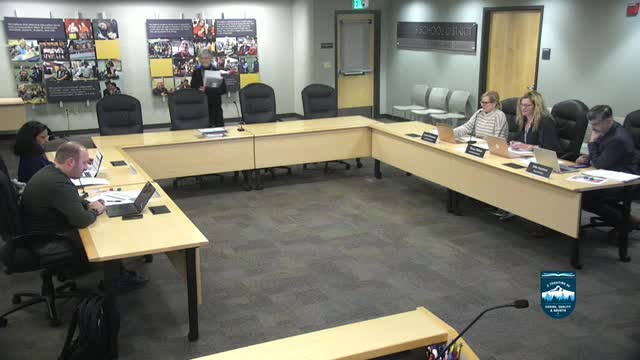
At a Feb. 10 Camas School District workshop, members of a Community Advisory Committee (CAC) presented a unanimous recommendation on student cell‑phone use that favors age‑differentiated guidance and building‑level procedures instead of a districtwide ban.
Leanne and John, CAC members who led the committee’s four‑month review, told the board the group surveyed district stakeholders and sought input from district staff. The committee heard from Dr. Anzalone and Mr. Rourke, reviewed material from other districts and received written input from the assistant director of transportation. Doreen sent a high‑school student survey the committee used to assess student perspectives.
The committee reported that more than half of high‑school respondents said phones help their learning and classroom experience because they use them for learning, connection and sharing resources, and that many students want phones powered on. “By and large, students are following the devices as part of during instruction time,” a committee summary said.
Committee members said the science linking phones to anxiety or depression is still evolving and that an outright ban could create enforcement and disciplinary burdens for staff. The committee highlighted an approach used this fall at Camas High: teacher‑managed caddies in which students stow phones at classroom entry unless a teacher has explicitly allowed use. The committee described caddies as “very successful” at that site.
Leanne told the board the CAC considered a range of options and landed on guidance that can be adapted by level and supported by principals. “I’m happy to report last week that we had a unanimous vote,” Leanne said when presenting the committee’s recommendation.
The board and staff discussed next steps: the CAC’s recommendations will be shared with principals for feedback and then move through the policy review schedule. Several board members and administrators emphasized that procedure and building‑level supports — for example, clear expectations for appropriate use, parent communication and guidance about what counts as an emergency — will be important to implementation.
Board members commended the CAC’s outreach to students, parents and staff. One board member noted the value of hearing student perspectives directly, observing that student panels and no‑phone experiences on multi‑day trips often show increased interaction when phones are absent. The presenters said community education and resources for parents will be part of any rollout.
The board did not take a formal vote at the workshop; staff said they will bring revised verbiage and principal feedback back to the board as the policy moves forward.