Get Full Government Meeting Transcripts, Videos, & Alerts Forever!
Get email alerts on the Social Emotional Learning topic
No spam. Unsubscribe anytime.
Camas School District SEL work group outlines curriculum rollout, family and staff supports
Summary
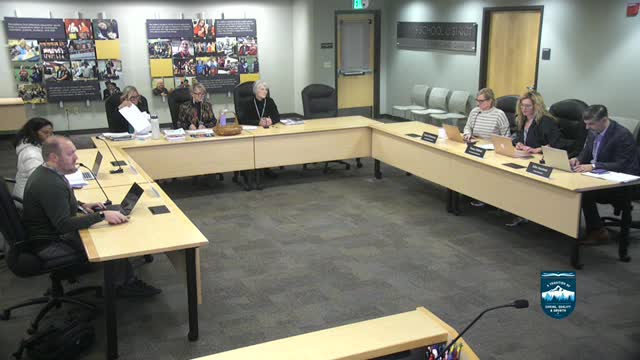
At a Feb. 10 board workshop, the district's social and emotional learning work group described curriculum review, staff wellness initiatives, parent workshops and planned measures to track SEL progress across pre-K–12.
At a Feb. 10 Camas School District board workshop, the district’s social and emotional learning (SEL) work group presented progress on a pre-K–12 SEL initiative, describing curriculum review, staff wellness efforts and expanded parent–caregiver programming.
The update, delivered by co‑leads Jennifer McMillan and Amy Stewart, summarized work on curriculum alignment, measurement approaches and community outreach that the group says will support student belonging, emotion regulation, growth mindset and hope.
McMillan, identified as an SEL work‑group co‑lead for the district, opened by leading the board through an example “warm welcome” exercise she said the group uses to model classroom practice. She described curricular materials now in use at the secondary level — including the Wayfinder workbook at Hays and Discovery — and explained practical classroom tools such as the Yale‑created “mood meter” and the elementary “zones of regulation.” “SEL is for everyone,” McMillan said, adding that the tools help adults and students name feelings and “put words to what’s happening inside of us.”
The work group told the board it is using multiple data sources to track progress. McMillan described Panorama survey data, the district’s participation in the Healthy Youth Survey, and routine student voice collection such as senior exit interviews as ways the district will measure belonging and related outcomes. The group said curriculum tracking in Canvas and teacher reporting also inform implementation status.
McMillan also highlighted parent and staff programming: since 2018 the district has offered 115 parent‑caregiver wellness opportunities and, she said, “over 3,400 people have come to our parent wellness events.” She described staff supports that include an annual SEL professional learning day, book studies, a leadership lab and online learning modules available through employee benefits.
Amy Stewart, the other co‑lead, summarized challenges: the group has met only twice so far this year and faces constrained time and budget pressures. “We just need to throw gasoline on the SEL fires to keep it going,” Stewart said, urging continued resource support for the work.
Board members asked specifically how the district will evaluate impact. The presenters said that the work group will produce action plans tied to measurable goals; early measures will include presence of a sustainable curriculum in each building, Panorama indicators and qualitative data from student interviews. “Let kids tell you if it’s working,” McMillan said, noting the value of direct student and staff feedback alongside surveys.
The presenters left the board with curricular artifacts and a plan to return with more detailed action plans and measurable benchmarks. They asked the board to expect future progress reports that will identify implementation steps and specific measures of student impact.
The presentation concluded with an optimistic‑close exercise led by the work group and distribution of small visual reminders for board members to keep SEL priorities visible in their work.