Get Full Government Meeting Transcripts, Videos, & Alerts Forever!
Get email alerts on the Pedestrian Safety topic
No spam. Unsubscribe anytime.
Committee reviews criteria and costs for pedestrian hybrid (Hawk) beacons; four sites under study
Summary
City transportation staff described how they evaluate requests for pedestrian hybrid beacons (PHBs), estimated costs and a short list of locations under study; staff emphasized engineering judgment, funding limits and TxDOT standards for state roads.
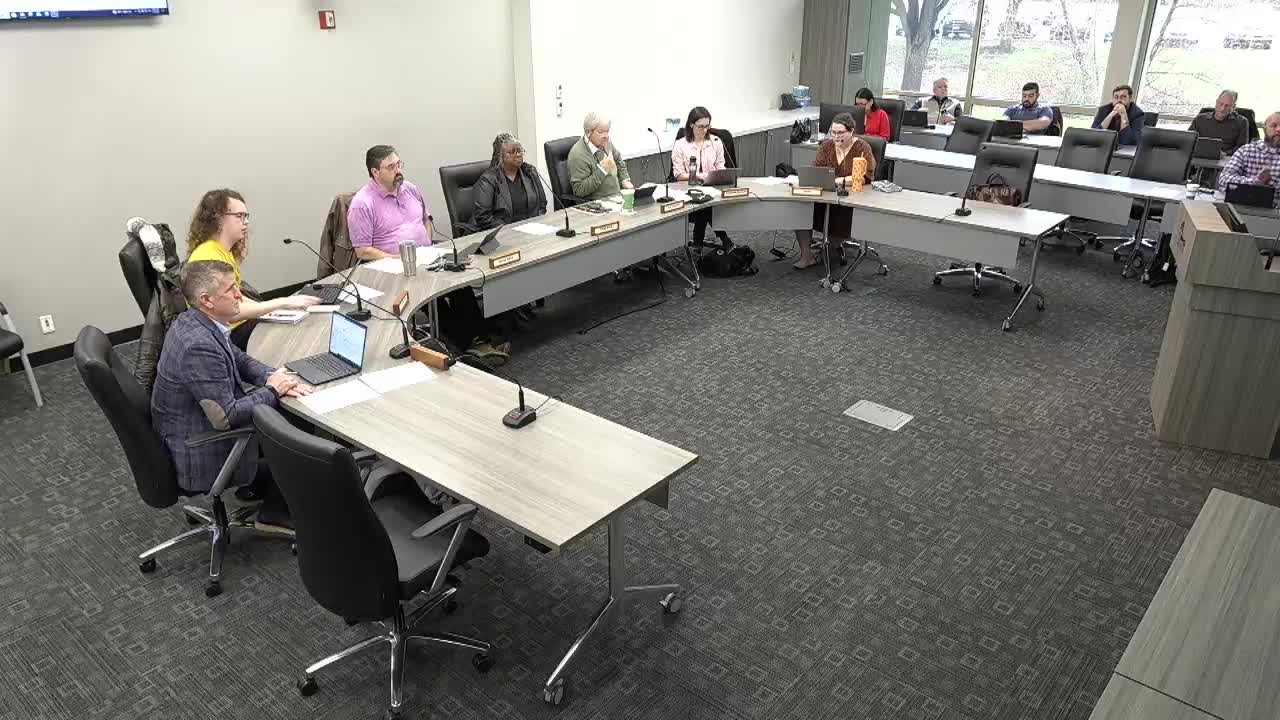
City Transportation Services staff briefed the Mobility Committee on Jan. 29 about the department’s approach to pedestrian hybrid beacons (PHBs, often called Hawk beacons) and other crossing treatments. The department’s representative, identified in the meeting as Chandra with Transportation Services, said decisions combine observed crossing volumes, safety history and funding availability.
Chandra said a PHB is typically considered when pedestrian or bicycle crossing volumes are high in a short window and when collision history is a factor. "When we consider a pedestrian hybrid beacon, it's a combination of number of crosses at, pedestrians or bikes that crossing their roadway, and, there is no set metrics," Chandra said, describing the approach as a rule of thumb rather than a strict warrant. Staff said they use a 300‑foot study area (maximum) to group mid‑block and nearby intersection crossings for evaluation; beyond 300 feet people generally do not walk to a provided crossing.
Cost and thresholds: Chandra and staff cited typical construction costs of roughly $150,000 to $200,000 per PHB location and indicated an upper range of about $250,000 for complex, multi‑lane installations. By comparison, they said recent traffic signals have quoted in the $700,000–$800,000 range. Committee members asked whether the “20–28 crossings in a peak hour” figure is a guideline or a strict requirement; staff replied it is guidance rather than a mandatory threshold and that collision history or other safety concerns can justify installation even if counts are below the guideline.
Planned evaluations and jurisdiction notes: Staff said four PHB locations are under study, including two on McKinney Street (one at or near Janie Street / the junction requested earlier by a committee member), a crossing at Mack Park, and a Teasley location that would serve South Lakes Park; staff said they would confirm the fourth location and follow up with the committee. The briefing noted that the city evaluates crossings on city‑controlled streets, and that TxDOT‑controlled roadways use stricter standards.
Process and next steps: Chandra said the department responds to requests, performs counts and observes pedestrian behavior, and evaluates alternatives (PHBs, enhanced crosswalks, LED beacons, signals) against available funding. Committee members requested clearer public guidance on how to request a PHB and asked staff to return with preferred rollout plans when funds become available. Staff said they will share the pending site list and follow up on the specific McKinney locations.