Get Full Government Meeting Transcripts, Videos, & Alerts Forever!
State presents draft rural health transformation plan; committee endorses application submission
Summary
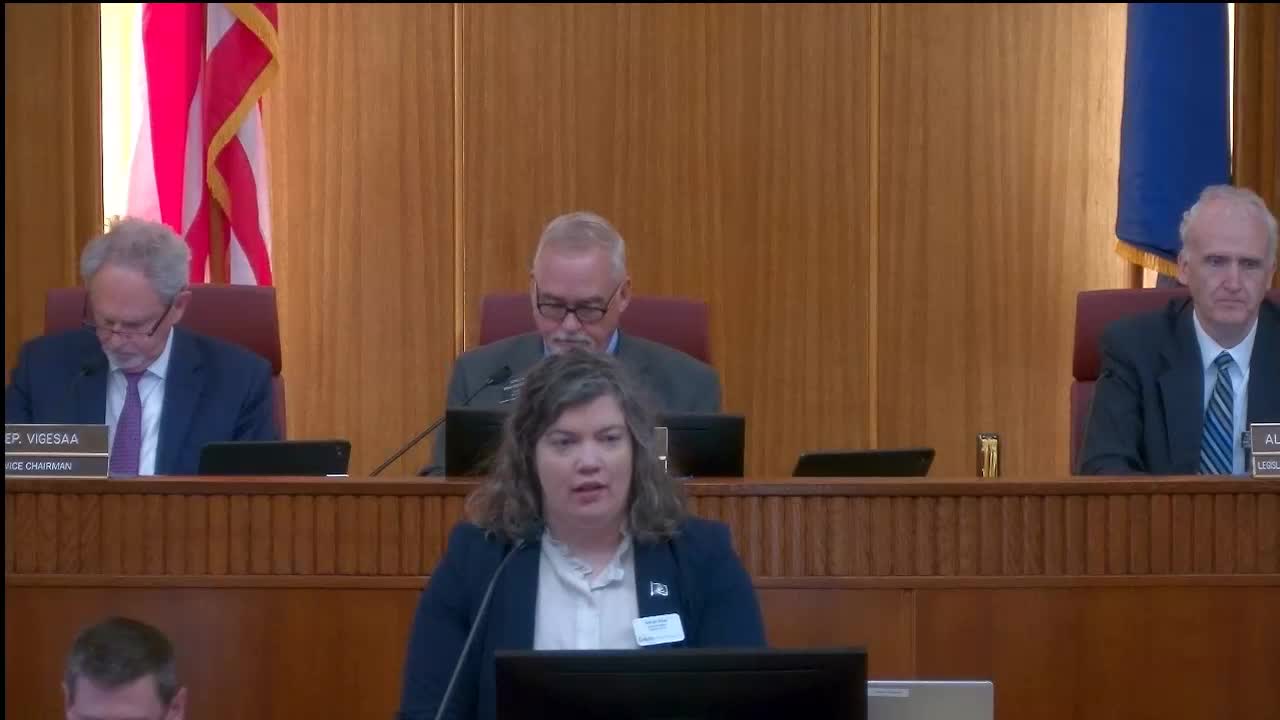
Sarah Aker, executive director of the Division of Medical Services at the North Dakota Department of Health and Human Services, told the Rural Health Transformation Committee the department submitted a draft plan for federal rural health transformation funding that prioritizes workforce, infrastructure and technology.
Sarah Aker, executive director of the Division of Medical Services at the North Dakota Department of Health and Human Services, told the Rural Health Transformation Committee the department submitted a draft plan for federal rural health transformation funding that prioritizes workforce, infrastructure and technology.
Aker said the state’s framework groups investments into four strategic priorities — strengthen and stabilize the rural health workforce; bring high‑quality health care closer to home; make North Dakota healthy again (prevention and community health); and connect technology, data and providers — and that the budget numbers are illustrative while the final federal award amount is still unknown. “We are going to receive at least $100,000,000 a year, or $500,000,000 over the first five years,” Aker said; CMS asked states also to submit a hypothetical $200,000,000‑per‑year budget (a $1,000,000,000 five‑year scenario).
Why it matters: the committee’s endorsement clears the department to finish its final application and move toward implementation planning once CMS announces awards. Committee members pressed DHHS on how funds will be distributed, monitored and sustained, and on specific allowable uses under CMS guidance.
Budget outline and allowable uses
Aker described preliminary allocation percentages (subject to change with the final award): roughly 16.2% for workforce strategies, about 58.4% for “bringing high quality care closer to home” (the largest share, driven by infrastructure and facility reconfiguration), 8.6% to prevention and community health, and about 16.8% for technology and data. She emphasized that the department is asking committee members to focus on percentages because the final dollar totals will depend on CMS’s award.
On allowable uses, Aker summarized guidance DHHS has received from CMS: states may not provide advance grant payments (most awards must be reimbursable), and certain construction costs and “loaner payment” structures are disallowed. Vehicle purchases such…
Already have an account? Log in
Subscribe to keep reading
Unlock the rest of this article — and every article on Citizen Portal.
- Unlimited articles
- AI-powered breakdowns of topics, speakers, decisions, and budgets
- Instant alerts when your location has a new meeting
- Follow topics and more locations
- 1,000 AI Insights / month, plus AI Chat