Get Full Government Meeting Transcripts, Videos, & Alerts Forever!
Get email alerts on the Autologous Directed Blood topic
No spam. Unsubscribe anytime.
Committee weighs bill to authorize autologous and directed blood donations; Vitalant warns of safety and cost risks
Summary
Representatives presented House Bill 135 to authorize and regulate autologous and directed blood donations; Vitalant and transfusion specialists urged caution, citing safety, waste and resource concerns and proposed technical amendments. The committee did not vote.
House Bill 135, a measure authorizing and regulating autologous (self‑donation) and direct (donation for a named recipient) blood donations, was presented to the Labor, Health & Social Services Committee and drew split reaction from witnesses.
Representative Joel Guggenmos and co‑introducer Sarah Penn told the committee HB 135 would create a statutory framework for autologous and directed donations, set minimum requirements for hospitals and blood banks, allow reasonable facilitation and storage fees, and direct the Wyoming Department of Health to adopt implementing rules.
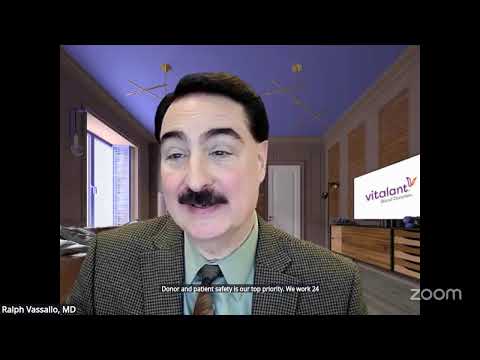
Vitalant, the region’s primary blood collector, said the bill as drafted would reduce safety, divert limited nonprofit blood‑center resources and increase costs for patients. Dr. Ralph Fassello, Vitalant’s chief medical and scientific officer, told the committee that blood‑center physicians currently review medically necessary autologous or directed donations to protect patients and donors and that removing that oversight would “most certainly lead to adverse patient outcomes.” He said about two‑thirds of autologous units ultimately are discarded and warned an increase in such collections could strain the community blood supply and risk compliance with federal standards.
Randy Ray, transfusion services supervisor at Cheyenne Regional Medical Center, told the committee Wyoming hospitals rely on out‑of‑state blood processors and said the bill lacks denial criteria tied to blood‑type incompatibility and infectious‑disease screening that are central to U.S. Food and Drug Administration guidance. Eric Poehling of the Wyoming Hospital Association said no Wyoming hospital currently forbids direct donations but noted extra processing costs and equipment investments — he cited a single piece of equipment costing roughly $60,000 — and said such costs would likely be passed to patients.
Supporters said the bill would expand patient choice, address religious or personal objections to transfused blood from unknown donors and provide options when community supply shortages occur. Patricia McCoy, a committee witness, cited national transfusion‑reaction data and argued that in some cases autologous or directed donations offer peace of mind or reduced risk for recipients.
Vitalant proposed a technical amendment the company urged the committee to adopt. The amendment would permit blood‑center clinicians to decline collections when “it is not medically advisable and would risk patient harm” and would allow fees that are “commensurate with” the actual costs of collection and storage rather than limiting charges to a blood bank’s regular fee schedule.
No formal vote occurred. Committee members and the sponsor said they would consider the Vitalant amendment and take additional technical drafting work with the Department of Health; the chairman suggested the matter might require more study or interim work.