Get Full Government Meeting Transcripts, Videos, & Alerts Forever!
Get email alerts on the Cimd Affordability topic
No spam. Unsubscribe anytime.
Council debates monitoring, documentation in draft CIMD affordability covenant; staff seeks to finalize language
Summary
Staff presented a revised draft covenant for workforce/affordable units under the CIMD process; councilors debated the level of tenant verification and monitoring, and one applicant said the current revisions are acceptable pending minor future edits.
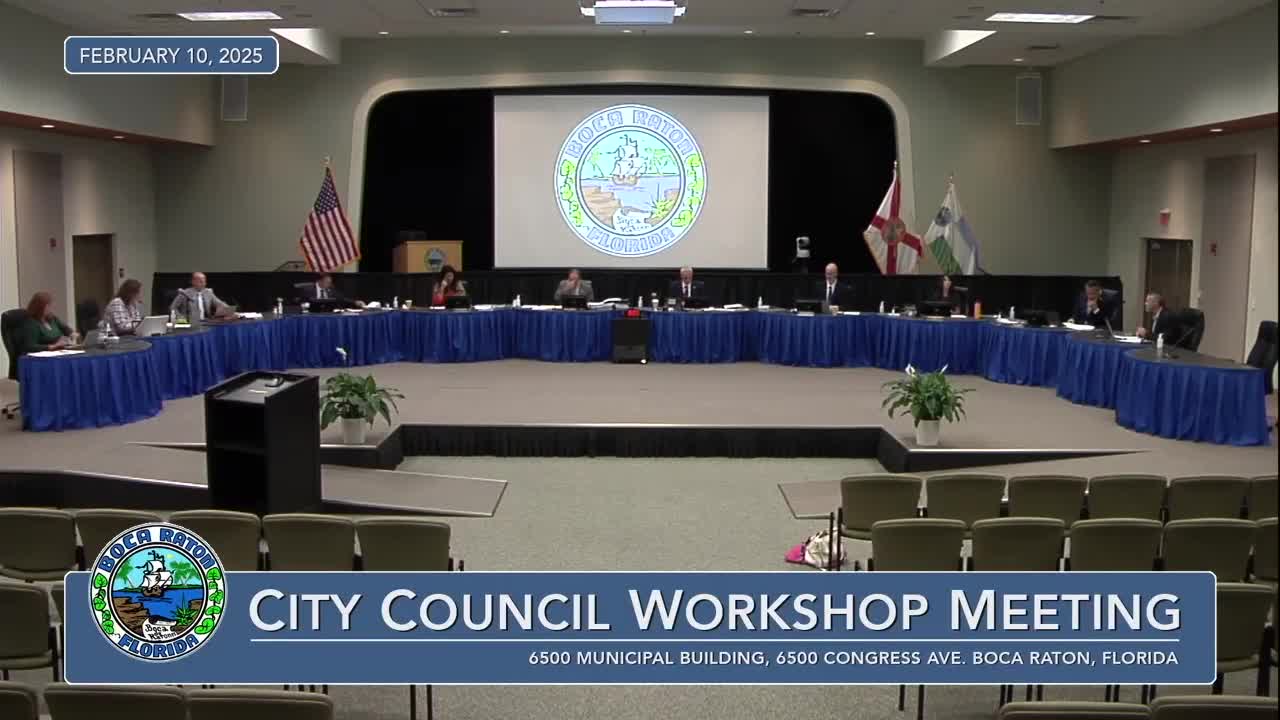
At a Feb. 10, 2025 workshop, City of Boca Raton staff briefed the council on a revised draft of the CIMD covenant for affordability and engaged councillors and applicants about monitoring, tenant verification and administrative burden.
Brandon Chadd, the city’s development services director, said that since council action in October staff had worked with applicants and that the latest draft, distributed the morning of the workshop, "substantially addresses and resolves" most comments. Chadd identified one outstanding point from a submission received by the mayor: whether income should be determined solely from the prior year’s tax returns or projected for the lease year and substantiated by pay stubs, bank statements or tax returns.
Bonnie Miskill, an attorney appearing for an applicant in the Office Depot project, told council that her client had reviewed the revised definition of affordability and "can live with this" for now, while reserving the right to seek future refinements.
Councilmember Wigder urged simplification. He proposed tightening the covenant so that owners and tenants make sworn attestations under penalty of perjury and that the private sector be allowed to carry out routine tenant verification and annual certifications rather than a HUD-style ongoing monitoring regime. "In many respects what is the intent of this affordable housing statute from Tallahassee?" Wigder asked, arguing that the city should avoid an application and monitoring process that he said could hinder use of the ordinance and slow units coming online.
City staff and legal counsel said the current draft removes interior-unit inspections and focuses monitoring on recordkeeping and documentation to support whether a leased unit meets the affordable/workforce criteria. City attorney staff characterized compliance monitoring in the covenant as primarily record review rather than routine physical inspections. Chadd noted the city’s community improvement staff currently handle housing compliance and that staffing might need to be adjusted if the program expands.
Council members agreed on the policy objective — to ensure a small pool of affordable/workforce units actually serves qualifying households — but differed over how prescriptive the covenant should be about applicant screening methods and annual compliance procedures. Chadd said the draft uses a reasonable set of documents to substantiate projected income for the lease year and that other earlier, more burdensome third-party verification requirements had been removed.
Chadd and councilmembers encouraged any applicants with specific remaining concerns to raise them so the council could consider discrete amendments before final action. The council did not vote on the covenant at the workshop; staff expected the item to return to the council agenda the next day with the chance for applicants to register formal objections or proposed changes.