Get Full Government Meeting Transcripts, Videos, & Alerts Forever!
Get email alerts on the Social Services Helplines topic
No spam. Unsubscribe anytime.
United Way urges Ohio to fund 2-1-1 statewide, requests $2 million annually
Summary
United Way of Greater Cincinnati told the Ohio House Children and Human Services Committee that Ohio’s 2-1-1 information-and-referral network lacks statewide coverage and requested roughly $2 million per year from the Department of Children and Youth budget to expand service to all 88 counties.
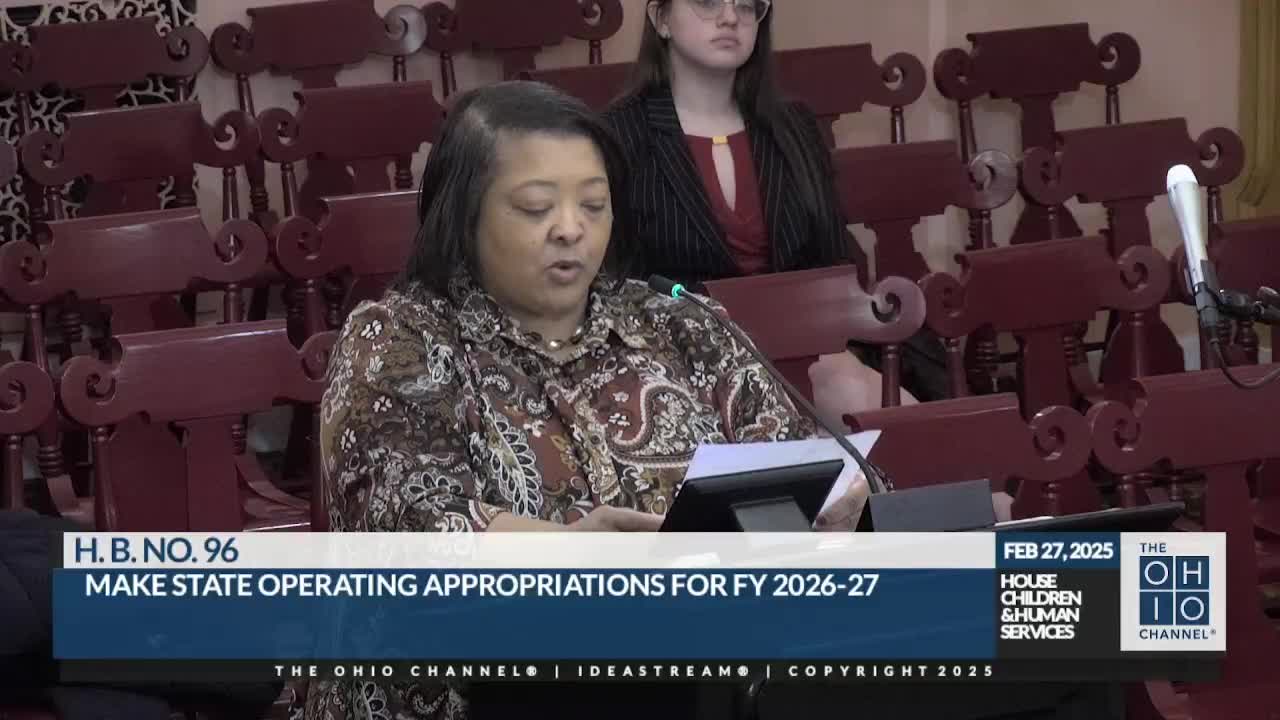
United Way of Greater Cincinnati representatives told the House Children and Human Services Committee on Oct. 28 that Ohio’s 2-1-1 system lacks sufficient revenue and that an annual state investment would extend coverage to counties currently without service.
Haley Barr, policy and advocacy at United Way of Greater Cincinnati, said Ohio 2-1-1 operates “in the same ecosystem as 911 and 988” but receives no state funding. She said 2-1-1 connects callers to housing, childcare, transportation and other services and that, as of the testimony, “people in 30 counties in the state…aren't able to access 2-1-1 resources,” leaving “millions of Ohioans” without that referral service.
The ask presented to the committee was for approximately $2,000,000 per year, to be included in the Department of Children and Youth (DCY) budget, language that United Way said is still being drafted. “An investment from the state would allow for Ohio 2-1-1 to expand service in areas that currently lack coverage,” Barr said.
Dr. Begtrap (identified in testimony as a United Way speaker) described Cincinnati’s 2-1-1 work, saying the local United Way maintains a database of more than 1,200 agencies and 6,000 services and handled about 50,000 assistance stories in Cincinnati last year. She offered a case example of a caller who avoided homelessness after 2-1-1 referral and care coordination.
United Way witnesses compared Ohio to neighboring states, saying Indiana, Michigan, Kentucky and Pennsylvania provide some state funding for 2-1-1. Barr said Ohio’s 2-1-1 currently relies on local and philanthropic funding and that state support would “mitigate” the coverage gaps. Committee members asked for a written amendment specifying the dollar figure and where it would be placed in the executive budget.
No formal committee action or vote occurred during the hearing; witnesses were presenting budget testimony and requests. The committee chair asked United Way to submit an amended, specific request and circulations to members.
Why it matters: 2-1-1 is a centralized referral line that state witnesses characterized as a “front door” to social supports. If funded, expansion could enable callers in currently uncovered counties to be screened and referred to local services; witnesses said that may include eviction prevention, tax-prep, childcare navigation and mental-health linkages.
Sources and next steps: United Way representatives said language and the appropriation amount are being finalized; the committee asked for written follow-up with the specific budget language and amendment.