Get email alerts on the Economic Development Target Sectors topic
No spam. Unsubscribe anytime.
Bend planners present target-sector analysis to guide economic development, flag housing, infrastructure and climate risks
Summary
City planners and the business advocate summarized an Econ Northwest study recommending four broad target-sector categories for Bend, discussed incentives and infrastructure constraints, and asked the Planning Commission for feedback ahead of expected BDAB and City Council consideration.
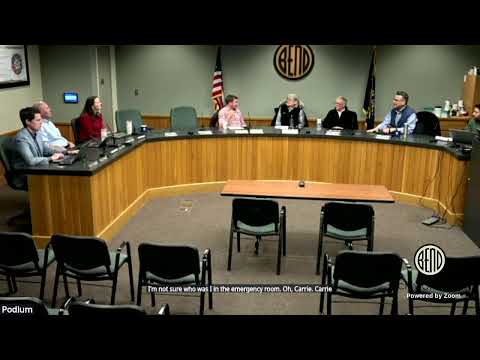
City of Bend planners presented an informational briefing on Jan. 27, 2025, outlining recommended target economic sectors and related land-use and incentive tools that the city will use to update its comprehensive plan and economic development strategy.
The presentation, led by Senior Planner Damien Cernick and Business Advocate Cyrus Mooney, summarized a draft report by consulting firm Econ Northwest and asked the Planning Commission for feedback before the Bend Economic Development Advisory Board (BDAB) and City Council review. “This is a project we’ve been working on for several months now to kind of get a head start on some of the work we’re going to be doing to update our comprehensive plan later this year,” Cernick said.
Why it matters: the city’s target-sector decisions will shape where the comprehensive plan allocates employment lands, how incentives such as tax increment financing (TIF) and enterprise-zone tools are deployed, and which industries the city prioritizes for infrastructure and workforce strategies. Commissioners and stakeholders raised questions about housing and workforce availability, transportation limits for large-scale manufacturing, wildfire and smoke risks for tourism, and the need for clearer emergency-service planning.
Econ Northwest’s analysis and staff summary
City staff said Econ Northwest analyzed employment trends in Bend from about 2007 through 2022 and regional projections, and combined quantitative data with stakeholder interviews (including OSU Cascades, Visit Bend, EDCO and the Small Business Development Center). Staff said Bend added just under 15,000 jobs in that period (about 14,494 jobs, presented by staff) and averaged roughly 2% annual growth during the window the consultant examined. The consultant’s regional projection covered Crook, Deschutes and Jefferson counties for the next decade.
Econ Northwest recommended four broader categories of target sectors; staff highlighted examples rather than specific ordinance language. Examples flagged in the presentation included health care and bioscience, professional and business services and technology (including an increase in “management of companies”), leisure and hospitality (tourism), and smaller, specialized manufacturing such as food and beverage or outdoor-product manufacturing.
Staff also highlighted Bend’s business-size profile: the consultant reported that a majority of Bend establishments are very small firms (staff cited roughly 60% with 1–5 employees and 79% with 1–25 employees). Staff said remote work increased in the period reviewed — from a low share before the pandemic to about 28% in 2022, per the presentation — and that roughly 61% of Bend’s workforce lives and works in Bend while other residents commute out (staff mentioned “about 17,000” residents who live in Bend but commute elsewhere). Cernick said the data show both “leading” sectors (above-average growth and concentration in Bend) and “emerging” sectors (fast growth but lower local concentration), which the city could target differently in policy and incentives.
Incentives, tools and constraints
Mooney described the city’s intent to align incentive programs with the target sectors. He noted that the urban renewal agency opened applications for a site-specific tax increment financing option earlier in the year and that the city may tie that program to the target-sector list so prospective applicants can better understand eligibility. He also contrasted local incentives with state-level programs, saying the state’s enterprise-zone and Business Oregon tools are mainly tailored to traded-sector businesses and larger-lot industrial users, while Bend is interested in adding local flexibility for mixed, smaller or community-serving businesses.
Commissioners and members of the public pressed staff on practical constraints: transport and logistics limit large-scale manufacturing in Bend compared with nearby Redmond (which has closer air service and cargo options), and limited industrial land and high commercial vacancy/land values affect redevelopment prospects. Commissioners suggested the city’s strategy emphasize industries that match Bend’s strengths (amenities, entrepreneurship, remote-work headquarters) while recognizing the limits for heavy export manufacturing.
Climate, workforce and emergency preparedness concerns
Multiple commissioners and staff raised climate impacts as a planning consideration. The presentation discussed wildfire smoke, extreme heat and drought as risks to tourism and outdoor-recreation businesses, and flagged potential utility and property-cost impacts. Cernick and Mooney said the target-sector work should inform partnerships with emergency management, public health and utilities.
Commissioners urged the city to make emergency services and resilience a clearer part of Bend’s economic pitch to prospective employers. One commissioner noted developers and potential corporate relocations are asking about fire mitigation and emergency planning, and suggested the city pack emergency-service information into its recruitment materials. Staff said coordination with emergency services is already part of the action plan tied to the work.
Local redevelopment and application-process suggestions
Commissioners identified several practical topics for staff follow-up: more detailed, parcel-level review of underused or obsolete employment properties to assess redevelopment potential; improved streetscape, signage and business-park presentation along major corridors such as Highway 97; and listing project teams (developer, consultant, engineers) at the front of staff reports and application materials to reduce neighborhood confusion. On a separate planning-item topic discussed after the presentation, commissioners asked staff to check the schedule for completing the Skyline Ranch Road connection and whether a temporary graded connection is feasible to improve emergency egress for some neighborhoods; staff said the road’s final connection is shared among multiple property owners under an existing development agreement and is timed to completion of an associated roundabout.
Next steps
Staff said the Econ Northwest report was on “version 3” and that a final version would be posted with BDAB materials. They invited Planning Commission feedback and noted the timeline: a presentation to BDAB the following Monday (noon meeting with remote option), BDAB return in March for a final recommendation to the City Council, and a currently scheduled City Council agenda item on April 2, 2025 (staff cautioned that the council date could be rescheduled during budget season). Mooney said the urban renewal TIF and other incentive tools are expected to be part of subsequent, more detailed strategy work.
Quotes
“This is a project we’ve been working on for several months now to kind of get a head start on some of the work we’re going to be doing to update our comprehensive plan later this year,” Cernick said.
“This report is really a snapshot of data over a set amount of time, and it’s not something that is a plan for how we’re gonna be looking strategically in the future,” Mooney said, urging the commission to provide feedback that could shape the city’s economic development strategy.
“There’s something to look at here because they’re doing really well in Bend,” Cernick said of industries that show both local concentration and faster-than-average growth, noting the city needs outreach to understand why some sectors outperform statewide trends.
Ending
Staff asked commissioners for specific feedback on the draft report, pledged to share the version of record with commissioners, and reiterated the BDAB and City Council schedule. Commissioners asked staff to follow up on application-format changes and the Skyline Ranch Road connection timeline before the council review.
(Reporting by staff presentation and Planning Commission discussion at the Jan. 27, 2025 meeting; materials from Econ Northwest and Bend staff were cited during the meeting.)
AI generated
The text on this page is AI generated. Summaries, highlights, analysis, and video transcripts are all produced from the original source material.
AI can make mistakes, so if you spot one, and we will fix it for everyone.
Note: the source content is unaltered by us. Any content source we link to, be it a video, an audio recording, or a document, is presented exactly as its publisher released it. That publisher is usually a government body, sometimes an individual official or another organisation.