Get Full Government Meeting Transcripts, Videos, & Alerts Forever!
Get email alerts on the Utilities Oversight topic
No spam. Unsubscribe anytime.
Public Utilities and Services Commission urges stronger, resourced utility oversight after water crisis
Summary
The Public Utilities and Services Commission chair presented the commission's October 2024 report, said the body lacks staffing and budget to fulfill oversight duties, and urged council and the mayor to consider enlarging audit capacity or an inspector-style office to provide sustained oversight.
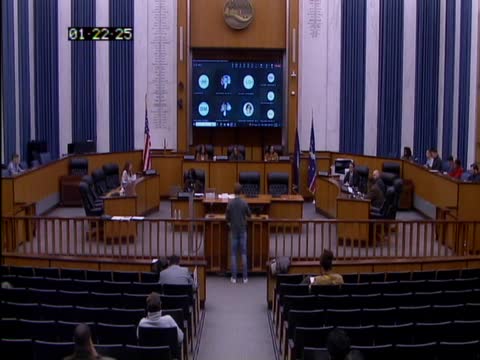
Kevin Cafferini, chair of Richmond's Public Utilities and Services Commission, told the Governmental Operations Standing Committee on Jan. 13 that the commission's October 2024 report identified funding and staffing shortfalls that limit the body's ability to provide robust oversight of city utilities. He said the recent water outage exposed gaps and underscored the need for continuous, resourced oversight.
Cafferini said the commission was formed under city code in November 2023, that it has struggled to attain quorums while three seats were vacant, and that commissioners are volunteers who generally meet during business hours. "The crux is that utility oversight requires funding, staffing and public input to work effectively," he said, and he urged the city to consider models that provide specialized technical staff or expanded auditor capacity.
Why it matters: The commission's work is meant to provide public accountability and technical review of water, gas, solid waste and other utilities. Cafferini noted the disparity between Richmond's volunteer-led commission (with a $5,000 budget) and larger regulatory bodies such as the Virginia State Corporation Commission, which have substantial engineering and legal staff. He suggested the city consider scalable models for oversight, including adding specialized auditors or a more fully staffed city auditor function.
Recent examples and public input: Cafferini referenced the water outage and a separate weekend gas outage near Jank Road that prompted constituent complaints about communication and timeliness of response. He said the commission is prepared to develop more specific recommendations on staffing, budget and operational changes and invited council members and the public to attend the commission's Jan. 30 meeting for continued discussion.
Committee response and next steps: Members asked the commission to draft concrete staffing and budget recommendations, clarify what public documents should be routinely published (contracts, rate structures, testing results), and identify any statutory changes necessary for the commission to access records. Cafferini said the commission intends to propose specific measures but did not present a full plan at this meeting.
Ending: The commission chair asked for council support in resourcing oversight work and called for public participation at the commission's upcoming meeting. "We look forward to working with council and the mayor to implement that," he said.