Get Full Government Meeting Transcripts, Videos, & Alerts Forever!
Get email alerts on the Signs Transit Villages topic
No spam. Unsubscribe anytime.
Planning commission recommends city council approve sign‑code tweaks for Transit Villages specific plan
Summary
The commission recommended adoption of Specific Plan Amendment No. 2 (Specific Plan No. 65) to align Transit Villages sign regulations with citywide rules, require sign programs for new unified centers, allow freestanding/monument signs under review, clarify building sign placement, and relax mural restrictions; recommendation was unanimous.
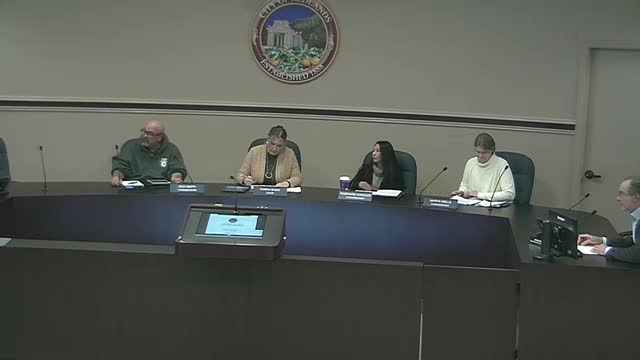
The Redlands Planning Commission on Jan. 28 voted to recommend that City Council approve Amendment No. 2 to the Transit Villages specific plan (Specific Plan No. 65), adopting changes to sign regulations intended to align the Specific Plan with the citywide sign code and to provide clearer standards for unified centers, freestanding signs, building‑mounted signage placement and murals.
Planner Brian Foote presented the item on behalf of Kevin Berry and described four main changes: (1) require sign programs for new unified centers and add a definition for "unified center" that matches the citywide sign code; (2) allow freestanding multi‑tenant (monument) signs consistent with Title 15 (citywide sign regulations) subject to commission review for preexisting unified centers; (3) clarify that building identification signs may be placed on facades that face a public street or a parking lot even if the facade does not contain the building entrance; and (4) modify mural provisions so larger noncommercial artwork on private property is not subject to overly restrictive dimensional sign rules or mistakenly routed through the Cultural Arts Commission's public‑program review.
Foote said the amendments are intended to address minor issues encountered with sign code application in largely previously developed areas of the Transit Villages plan area, which includes the downtown, the Esri campus area, the university train station corridor and adjacent blocks. He told commissioners the changes would not retroactively require existing multi‑tenant centers that lack a sign program to create one; preexisting centers without a sign program would be carved out of that new requirement, though freestanding signs at such centers would remain subject to Planning Commission review and the standard permitting process.
Commissioners asked clarifying questions about how sign programs allocate signage for multi‑tenant developments and whether corner lots that historically received two building signs would be affected; staff responded that unique situations are best handled through sign programs rather than a blanket citywide code change so staff and the commission can evaluate proposals on their merits. The transcript records a brief public comment from Andy Holder, who clarified his recollection of an earlier case involving a sign program for a particular commercial complex on Indiana Court; Holder said that decision allowed two building signs at a corner but governed their combined area consistent with code allowances.
Foote told the commission the amendment is exempt from CEQA under the "common sense" rule (CEQA Guideline section 15061(b)(3)) because text changes to sign standards do not have a potential for significant environmental effects. After discussion and no additional public comment, Commissioner Wells moved that the commission adopt Resolution No. 1695 recommending City Council approval of Specific Plan Amendment No. 2; Commissioner Gonzales seconded. The motion carried on a voice vote.
The recommendation now goes to City Council for final action. If council approves, the text changes will be incorporated into the Transit Villages specific plan and guide future sign permits and sign‑program reviews in that plan area.