Get Full Government Meeting Transcripts, Videos, & Alerts Forever!
Get email alerts on the Urban Forestry topic
No spam. Unsubscribe anytime.
Le Mars outlines ash-tree removals, right-of-way rules and new grinding contracts
Summary
Street staff reported removing hundreds of ash trees from city property and the right of way, explained maintenance responsibilities under Iowa law, and said the city is seeking paid grinding contracts to manage growing wood piles.
Le Mars street staff told the council the city removed hundreds of ash trees and is adjusting disposal arrangements as demand for grinding services grows.
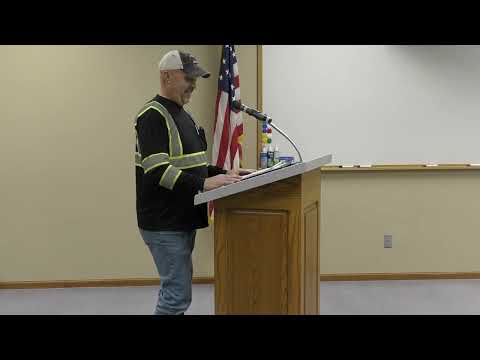
Scott Kinnight, of the Le Mars Street Department, said the city and parks crews removed 280 ash trees on city-owned property and that the street department removed 52 ash trees in the public right of way. He said crews have completed stump removal and backfilling on roughly 80–90% of those trees and that workers trimmed or listed 271 trees hanging low over sidewalks and streets for follow-up.
Kinnight told the council that maintenance responsibility for trees in the right of way lies with the adjoining property owner unless the tree is dead or damaged, adding that the city will remove a tree only if it is dead or significantly split. He referenced state law as the controlling standard for those responsibilities.
Council members and staff discussed the city’s rules for taking down diseased, dangerous or dead trees — a set of criteria previously referred to as the “5 D’s.” Staff said the city currently follows Iowa Code standards and that a formal arborist determination is not always required for removal when damage is obvious.
Kinnight said the city is having trouble keeping up with disposal and grinding. Colbeck and Shamrock used to grind material but availability has become inconsistent; the city currently hauls whole material to a private site (Del Callan) and is negotiating contracts with grinders, including Highland Materials in Sioux City, to take and process material on a regular schedule. He estimated grinding costs at about $8,000–$10,000 a year under current arrangements and said new contracts will likely carry similar costs.
Council members asked whether crews would drill trees to prove hollowness; staff said crews can and do inspect and remove trees when evidence of disease or structural failure is clear. No ordinance change or formal policy vote occurred at this meeting.