Get Full Government Meeting Transcripts, Videos, & Alerts Forever!
Get email alerts on the Academic Improvement topic
No spam. Unsubscribe anytime.
Board hears updates from academic core task forces on literacy, math and science
Summary
District task forces reported progress on disciplinary literacy, mathematics and science work tied to district improvement goals and teacher leadership. Teams described year-one learning, a three-year plan and early data showing gaps to target for implementation.
Southeast Polk Community School District staff updated the board Feb. 20 on a districtwide task-force effort focused on the academic core: disciplinary literacy, mathematics and science. The work is structured as a three-year initiative to strengthen Tier 1 instruction and to sustain improvements across K-12.
Task-force members told the board the work began in September and that this first year emphasized learning, data review and building common understandings across elementary, middle and high schools. The disciplinary literacy team reported analyzing reading data and said district averages for grades 3 through 11 showed about 73% of students meeting reading benchmarks; staff said the district's Tier 1 goal is 80% or higher and that instruction needs to reflect increasing complexity of texts and critical-thinking demands as students advance.
Math teacher leaders said elementary proficiency rates have been higher than secondary levels since the pandemic and the team is working to transfer elementary successes into secondary classrooms. The math task force described professional learning, conference participation and building-level goals driven by local data.
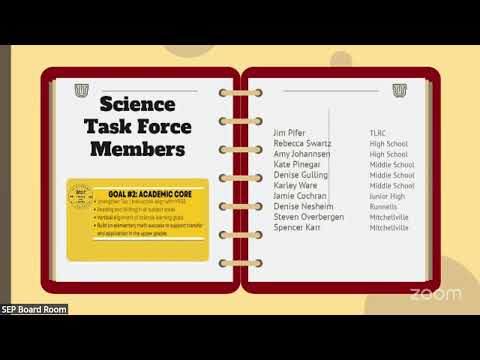
The science coordinator said state assessment data are available for fifth, eighth and tenth grades and the team is collecting additional near-term benchmark data (released state items and other measures) to track progress across third through fifth and ninth and tenth grades. Staff emphasized developing a guaranteed and viable curriculum so students have consistent, grade-appropriate science learning across multiple buildings.
The board and staff described the plan as: year 1 ' overview and alignment; year 2 ' implementation; year 3 ' impact and sustainability. Board members thanked teacher leaders and staff for the work and asked that future updates include measures of impact as the initiative moves into implementation.
Ending: Staff said they will return with spring updates and impact measures as the district moves from year-one learning into implementation.