Get Full Government Meeting Transcripts, Videos, & Alerts Forever!
Get email alerts on the School Funding Equalization topic
No spam. Unsubscribe anytime.
How Utah’s basic school program uses property tax, WPUs and a guarantee to equalize funding
Summary
Committee staff explained the mechanics of the minimum school program’s equalization: the basic levy, weighted pupil units (WPUs), the state’s revenue target (prior‑year budgeted revenue plus net new growth) and the voted-and-board local levy guarantee up to 20 increments. Members discussed rural impacts and possible program changes.
The Public Education Subcommittee received a detailed staff briefing Jan. 24 explaining how property taxes, weighted pupil units (WPUs) and state appropriations interact to fund the minimum school program.
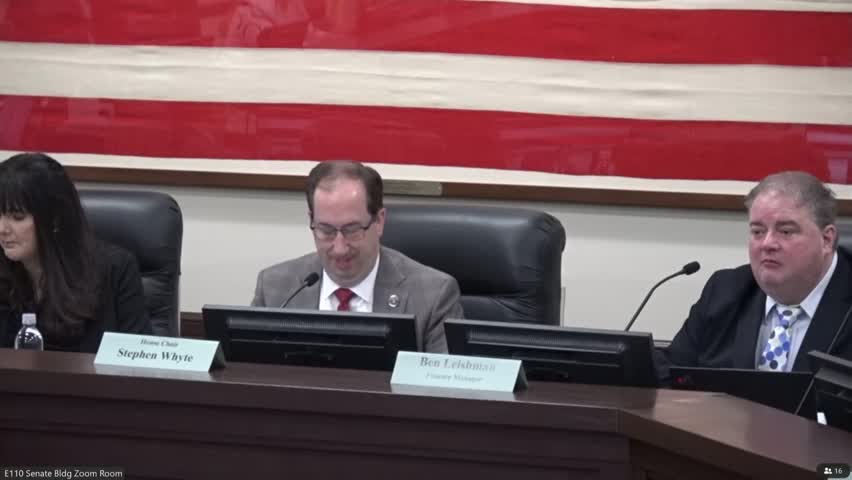
Ben Leishman, a staff member who led the briefing, described the core statutory mechanics: the legislature sets an annual revenue target that the Tax Commission converts into an estimated basic levy rate. Leishman explained the statutory target is prior-year budgeted revenue plus net new growth (the change in taxable property value); that statutory target, when divided across statewide taxable value, yields the basic levy that every district must impose to participate in the equalization program.
Leishman used a three-district example to show how equalization works: with identical WPUs and program costs, districts with lower local taxable values receive greater state aid to make up the difference, while a high‑value district can generate more property tax revenue than required and must remit the excess (a statutory recapture) to the Uniform School Fund.
The staffer walked the committee through how recent legislative changes use the basic levy mechanism to advance additional goals. The 2016 adjustment added a $75 million increment; later changes created the equity pupil rate and the WPU value rate, which were structured to preserve the state/local share as the WPU value rises. Those changes also produced funds that have been redirected to targeted programs (for example, teacher and student success). Leishman said the estimated basic rate for the 2026 target is 0.001463 and that components of the increase include net new growth and a WPU inflation adjustment.
Leishman also explained voted-and-board levies, which are locally imposed discretionary levies (voted levies require voter approval; board levies are set by local boards). The state guarantees part of those levies: the guarantee is calculated using a three-step formula tied to prior-year WPU values and statutory indexing, and the guarantee effectively brings qualifying districts up to a fixed amount per tax increment. Under current law the state guarantees up to 20 tax increments; Leishman described how the guarantee rate can change depending on how restricted funds are appropriated by the Legislature.
Committee members questioned how the system affects rural districts. Representative Tiara Auxier asked whether residents in lower‑value rural districts pay a higher share of their local income toward WPUs; Leishman answered that under the basic equalization mechanism “every school district is applying the same rate and generating different amounts,” and the equalization adjusts state aid accordingly. Senators and representatives asked staff to compare hold-harmless protections, small‑school supplements and other programs that can affect districts with high fixed costs. Leishman noted the necessarily existent small schools formula targets isolated small districts and said proposals to adjust that formula will be considered in upcoming meetings.
Leishman said the at‑risk WPU add‑on is currently in year 5 of a 10‑year statutory phase-in and that the subcommittee has the discretion to pace future increments. The briefing closed with members asking staff for additional data on district tax rates, hold‑harmless calculations and the distributional effects of different guarantee settings.
The committee did not take formal action on this informational briefing; members asked staff to return with supplemental analyses.