Get Full Government Meeting Transcripts, Videos, & Alerts Forever!
Get email alerts on the Lead Remediation topic
No spam. Unsubscribe anytime.
County outlines LEHI and Healthy Homes grants, details state $1 million for elevated‑blood‑lead households
Summary
Project director Franshaun Dickinson reviewed New Castle County’s LEHI and Healthy Homes grants, past match commitments and partners; staff said the state Department of Public Health has dedicated $1 million to assist households with elevated blood lead levels regardless of HUD income limits.
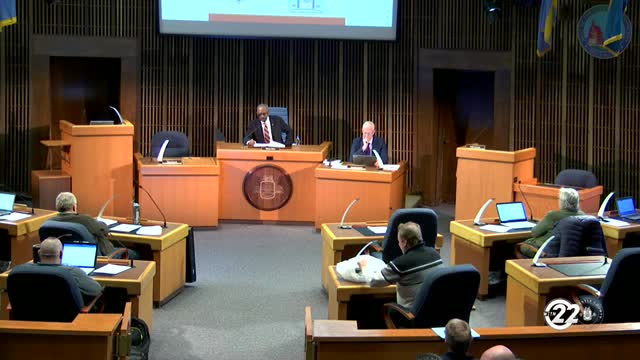
Franshaun Dickinson, project director for New Castle County’s LEHI and Healthy Homes program, told the Community Service Committee on Jan. 28 that the county has received multiple HUD grants for lead hazard control and healthy‑homes work and that the county’s program serves homeowners, renters and landlord‑occupied units.
Dickinson said the county received an initial 2019 LEHI grant of $330,000 and later awards including a 2022 Healthy Homes production grant of $2 million and a 2022 LEHI and Healthy Homes grant of $880,000; she said the program has received $1,410,000 in HUD funding to date for LEHI and Healthy Homes activities. Dickinson said HUD recently increased the per‑unit maximum for lead remediation from $20,000 to $30,000 and for healthy‑homes items from $10,000 to $15,000.
She described the county’s approach to match funding and partnerships: the 2022 grant carries a match commitment of roughly $721,000, with the City of Wilmington committing $450,000 toward that match; the county’s previous 2019 grant included more than $600,000 in Wilmington match. Dickinson said the county has used match to supplement remediation work and to address units whose total costs exceeded HUD caps.
The county also received new state funding: Dickinson said the Delaware Division of Public Health dedicated $1,000,000 to provide services specifically for households with elevated blood lead (EBL) levels. Unlike HUD LEHI funds, the state EBL funding does not require households to meet HUD low‑to‑moderate income limits, Dickinson said, allowing the county to serve elevated‑blood‑lead households regardless of income.
"We are one of the only programs that are not just available to homeowners, but also renters and landlords," Dickinson said, adding that the program has supported training, workforce development and local small business participation in lead abatement work. She named Black Mothers in Power, Habitat for Humanity of New Castle County and Cornerstone West as partners that provide referrals and assistance.
Why it matters: Lead hazard control is targeted at reducing children’s exposure to lead in housing; the state funds provide an avenue to assist families who would otherwise be excluded by HUD income rules. Dickinson emphasized the county’s competitive approach to federal grants and the importance of local match to expand scope.
Committee members praised Dickinson’s work during the presentation. Councilman Street called her performance "not gonna go unnoticed" and asked that the county recognize staff contributions. Dickinson noted match can be non‑cash (personnel time) and reported average unit costs from an earlier grant cycle when additional match allowed more comprehensive remediation.
What’s next: Dickinson thanked the committee for ongoing support and said she would return with specific funding requests as grant opportunities arise. The committee also discussed agenda item 25012, a proposed amendment to the county budget to accept $1,000,000 from the state Division of Public Health for LEHI/Healthy Homes administration; Councilman Hollins asked to be recorded as a cosponsor of that agenda item.