Get Full Government Meeting Transcripts, Videos, & Alerts Forever!
Get email alerts on the Investment Performance Compensation topic
No spam. Unsubscribe anytime.
Committee advances bill to smooth investment performance pay for treasurer’s office
Summary
Senate File 38 would change the averaging method used to compute performance compensation for investment staff in the State Treasurer’s Office and was approved by the committee after staff explained it smooths year-to-year volatility.
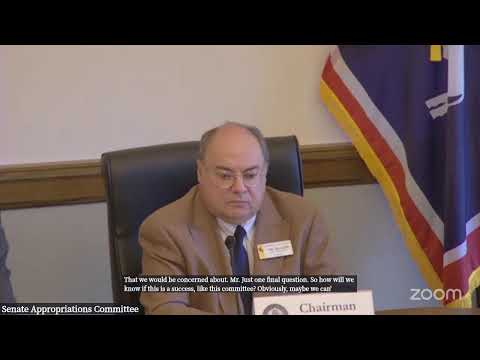
The Senate Appropriations Committee voted to advance Senate File 38, which modifies how the state calculates investment performance compensation for participants tied to state investment returns.
Senator Gru introduced the bill, which the committee was told originates from the State Treasurer's Office and a prior study on performance compensation. "What it does on page 2, the state treasurer may implement and administer a performance compensation plan in accordance with this subsection," Gru said, describing arithmetic and geometric averaging methods intended to smooth payouts.
Deputy State Treasurer Dawn Williams explained the change came from a legislative study and is intended to smooth fluctuations in performance pay by using a geometric/arithmetic average across fiscal years rather than year-over-year calculations. "This bill does not increase performance compensation or apply it to anybody else. It just is a...different smoothing arithmetic function for the calculation of performance compensation for the existing folks who receive performance comp," Williams said.
Patrick Fleming, who identified himself as a participant and described the rationale, said the change implements consultant recommendations to average returns over multiple years to reduce volatility and better match a mature payout structure. Fleming said the approach would not expand eligibility or raise the compensation pot, only change the averaging method for calculation.
Committee members asked for examples and clearer administration details; Senator Smith requested an example of how the calculation would work and Williams said the change was expected to be negligible in dollar terms but would smooth spikes and troughs. Patrick Fleming described the approach as a multi-year averaging recommended by consultants (Makita and RVK per testimony) to reduce volatility.
The committee took no public opposition and voted to pass the bill. Roll call recorded aye votes from Senators Driscoll, Garou, Larson, Smith and Chairman Salazar and the committee advanced the bill to the floor for further consideration.
Supporters said the measure is intended as a retention tool to keep investment staff and reduce turnover, while committee members suggested the full Senate debate could refine details and include the Treasurer's Office for further explanation.