Get Full Government Meeting Transcripts, Videos, & Alerts Forever!
Get email alerts on the School Reconfiguration topic
No spam. Unsubscribe anytime.
Broward school board approves reconfiguration plan including early‑learning center at Broward Estates after heated public comment
Summary
The Broward County School Board on Jan. 28 approved a package of school reconfigurations and program changes, including converting Broward Estates Elementary into an early‑learning center, after lengthy public comment and a directive that cost savings from the change be devoted to establishing and maintaining the new early‑learning program.
The Broward County School Board on Jan. 28 approved a package of recommendations to reconfigure several schools, including converting Broward Estates Elementary into an early‑learning center and moving some neighborhood students to nearby schools.
The board voted to adopt the superintendent’s Phase 1 recommendations for school repurposing after more than two hours of public comment from parents, local officials and students. Supporters called the changes a way to increase kindergarten readiness and better allocate district resources; opponents said the district had not fully answered questions about facility condition, transportation and community impact.
Superintendent Howard Hepburn said district officials flagged schools that are underenrolled and that repurposing can concentrate resources where they produce better outcomes. "We found schools with low enrollment and nearby needs for early childhood services," Hepburn said. He said the district will use the newer, usable buildings on the Broward Estates campus for early‑learning classrooms and will work with community and nonprofit partners to provide wraparound services, adding that necessary capital and program funding will be identified before students are placed.
The recommendations passed after several rounds of discussion and an amendment directing district staff to prepare a plan that allocates any cost savings from the Broward Estates repurposing to establishing and maintaining the early‑learning center. The board also directed that the superintendent have discretion in the first year to use part of those savings to support students who must transfer to nearby schools during the transition.
Why this matters: district officials cited kindergarten‑readiness data in the area — about 30% on average within the nearby service radius — and projected continued enrollment decline at Broward Estates if the district did not act. Board members who supported the plan said concentrating resources can improve early academic outcomes, while speakers from the Broward Estates community called for clearer, faster detail on facility repairs and stronger guarantees that local children would continue to be served.
Key details and next steps
- Transition and family outreach: The board directed the superintendent to meet individually with families and the Broward Estates community to explain options and to help families through school choice and assignment processes. Staff said the district will provide transportation where required by safety or policy. Hepburn said the district will hold additional community meetings and develop a detailed timeline and plan to present back to the board.
- Facilities review and funding: The district has placed Broward Estates and the other affected schools at the front of a facilities condition assessment (FCA). Staff said the FCA will identify capital needs and the superintendent will return to the board with recommendations for capital funding and partner commitments before programs begin.
- Priority for local families: The board adopted a directive instructing the superintendent to prioritize, where legally allowed by program rules, families who live inside the existing Broward Estates attendance area for seats in the new early‑learning programs.
- Allocation of savings: The board voted that any annual cost savings realized by repurposing Broward Estates should be used to establish and sustain the early‑learning center; staff will return to the board with a detailed allocation plan by March 1, 2025. The board also approved language allowing the superintendent limited latitude in the initial year to use some savings to smooth the student transition if needed.
Public reaction and board debate
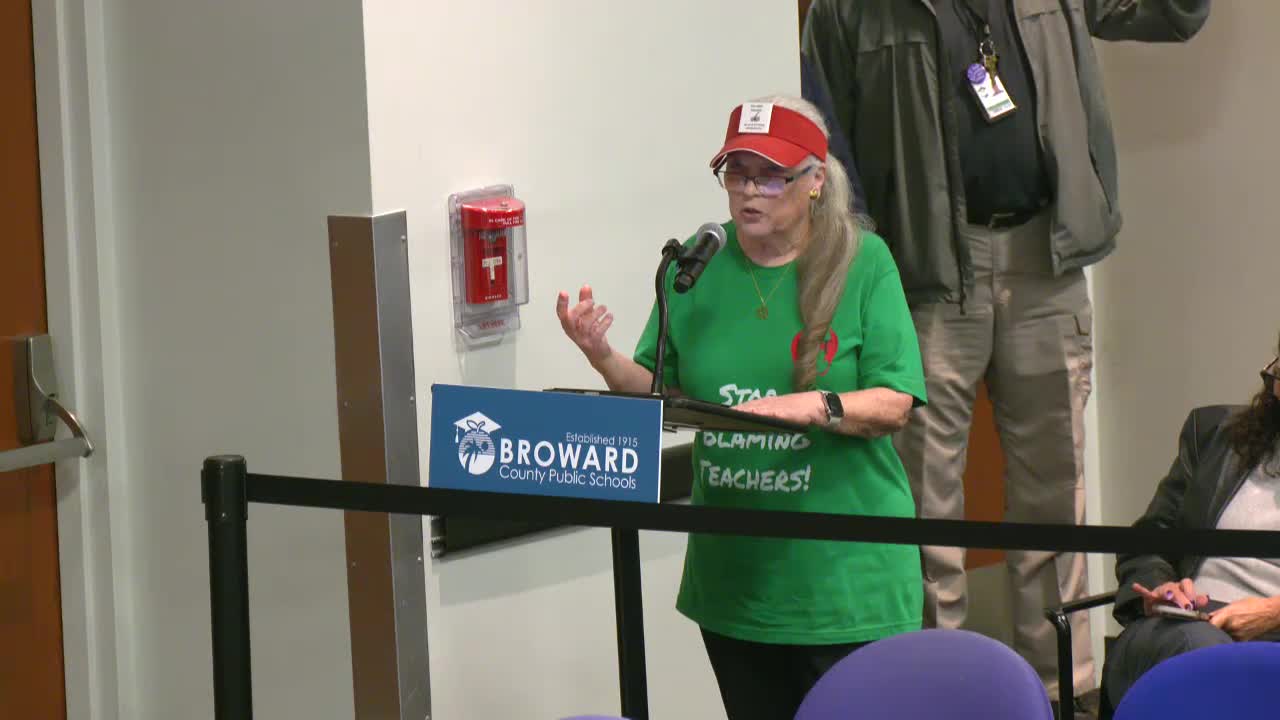
Hundreds of community members signed up to speak during the meeting. Parents, grandparents and city leaders from Lauderhill urged the board to keep Broward Estates a neighborhood elementary school, citing community history, walking access for older caregivers and concerns about moving children to a Montessori program at nearby Martin Luther King Academy. Lauderhill Mayor Denise Grant and other local officials urged the board to explore options that would preserve a publicly funded neighborhood elementary while adding early‑learning services.
Supporters of the repurposing cited the district’s kindergarten‑readiness figures and argued an early‑learning center could raise readiness scores and improve long‑term outcomes. Several board members said the move is part of a larger effort to match physical space and funding to current enrollment and program needs.
What the votes showed
Board members ultimately approved the superintendent’s Phase 1 package and the follow‑up directives tied to Broward Estates. Votes on the individual reconfiguration items (MM1–MM7) were recorded on the floor and each item passed after discussion.
Where to watch for follow‑up
The board asked the superintendent to return with (a) a written plan for the early‑learning center that documents facility needs and the program budget; (b) a March 1, 2025 timeline for allocation of cost savings and the initial funding plan; and (c) a community engagement schedule so families can meet with staff one‑on‑one about placement options. District staff also said they would share inventory and cost estimates from the FCA once they are available.
An ending note
Board members stressed that the conversation would continue beyond the vote: Superintendent Hepburn said the recommendations are a starting point and pledged more community meetings, more specifics on facility work and partnership outreach. "This is not the end of the conversation — it is the first step in restoring programs and services where they will do the most good for children," Hepburn said.
Speakers quoted in this article include Superintendent Howard Hepburn; Laurie Canning, executive director for family and community engagement; Mayor Denise Grant (City of Lauderhill); and multiple community members who spoke during the public comment period.