ODNR outlines outdoor-recreation tourism data and partnerships with local CVBs
Loading...
Summary
Director Mary Mertz told the Arts, Athletics and Tourism Committee that Ohio's outdoor recreation drives billions in economic activity, citing studies and examples of state-park programs, trails, boating, hunting and events; members asked about out-of-state license fees, access for urban students and invasive aquatic vegetation.
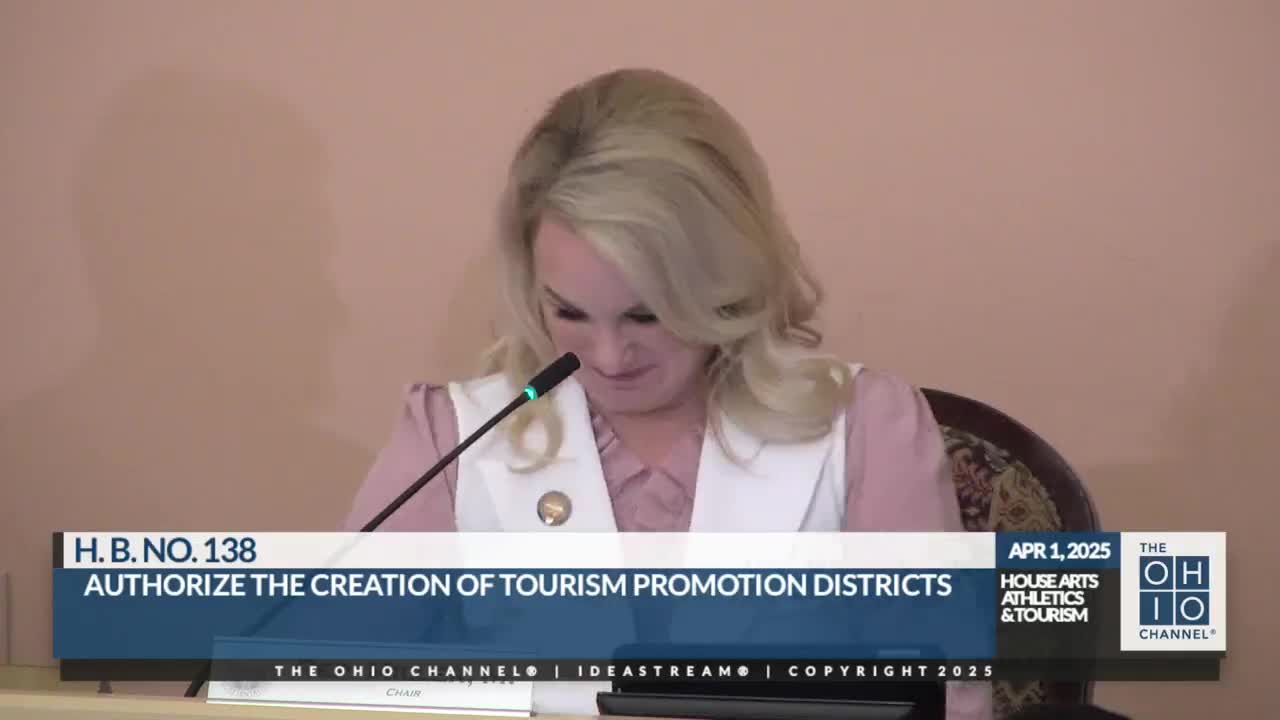
Director Mary Mertz of the Ohio Department of Natural Resources told the Arts, Athletics and Tourism Committee that outdoor recreation is a major driver of Ohio’s economy and described how ODNR works with local convention-and-visitor bureaus to promote overnight stays, events and trails.
Mertz cited agency and partner studies: a 2022 study of outdoor sportsmen and women that the department said generated an estimated $12.5 billion in annual economic activity, a 2023 study showing ODNR state-park overnight visitors generated $392 million in direct spending and nearly $40 million in state and local tax revenue, and a 2022 marine trade study estimating $6.4 billion in boating-related economic activity. She also said ODNR issued more than 600 special-activity permits last year, including about 190 races, and reported 1.1 million overnight stays at ODNR lodges, cabins and campgrounds in the prior year.
Mertz described partnerships and locality-specific promotions: park managers are expected to coordinate with local CVBs and chambers; Mohican State Park places CVB guides in cabins; ODNR works with Destination Toledo and Shores and Islands on birding events at Lake Erie; Hocking Hills Tourism Association runs large park events including an annual winter hike that can bring thousands of hikers. The department emphasizes maintaining a range of lodging and campsite price points and compares state park fees with private campgrounds to avoid undercutting local businesses.
Committee members raised a range of questions. Chair Miller and Representative Gerald asked about fees for out‑of‑state hunters and anglers; Mertz said the department’s budget proposal includes increased out‑of‑state license fees and that modeling suggests a modest initial drop in out‑of‑state participation followed by recovery. Representative Jerrells asked how ODNR connects inner‑city students to parks and trails; Mertz described an on‑campus downtown park at the State Fairgrounds where schools visit, an active naturalist program that visits classrooms statewide, and grant programs that fund local park and trail projects.
Representative Thomas asked about invasive aquatic vegetation and water-quality impacts at lakes such as Mosquito Lake and Indian Lake. Mertz said vegetation growth can make recreation difficult and described ongoing consultant assessments, chemical and mechanical controls, sediment and dredge management, and summer-season plans to address vegetation spread. She said Indian Lake was restored to improved usability after prior interventions.
Members praised the department’s work and fundraising results and invited ODNR to continue coordination with the committee. "When you invest in state parks, when you invest in wildlife, when you invest in that type of recreation, I think it has a great payback," Mertz said. The committee accepted ODNR materials and thanked the director for the presentation.